

I recently had a conversation with a friend of mine about Postmillennialism. I plan to dive more comprehensively into this subject sometime in the future. But for now here are some tidbits on the subject that hopefully are helpful in understanding what the Bible says about eschatology. I place my friend’s objections in quotations. My responses are without.
The Olivet Discourse
“There are serious problems with the preterist view of the Olivet Discourse, like how history doesn’t record Jesus appearing in the sky (something the whole Earth will see v.30), and how no rapture has taken place as of yet (don’t get caught up on the term “rapture,” I don’t mean a “secret” rapture).”
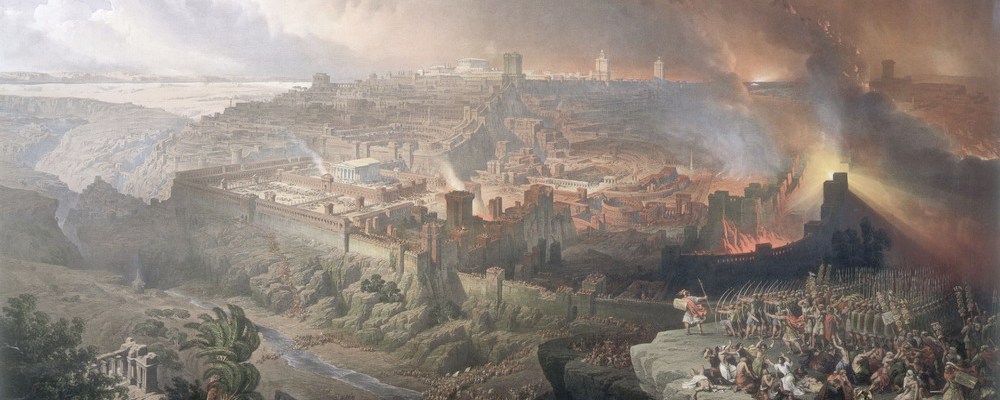
It seems to me that futuristic views of the Olivet Discourse have more problems than the preterist. Shortly after Jesus says, “Then the sign of the Son of Man will appear in heaven, and then all the tribes of the earth will mourn, and they will see the Son of Man coming on the clouds of heaven with power and great glory,” (Matthew 24:30) He says, “Assuredly, I say to you, this generation will by no means pass away till all these things take place.” (v. 34) The preterist view takes that to mean that it was the generation he was speaking to who would witness the things he just described. This fits very well into taking it as the destruction of Jerusalem, which did happen 40 years after Jesus spoke these words. And that isn’t eisegesis. The Olivet Discourse begins by Jesus showing them the Temple, and immediately after, the Disciples connecting the destruction of the Temple with Jesus’ coming.
How does Matthew 24 beigin?
“Then Jesus went out and departed from the temple, and His disciples came up to show Him the buildings of the temple. And Jesus said to them, “Do you not see all these things? Assuredly, I say to you, not one stone shall be left here upon another, that shall not be thrown down.” Now as He sat on the Mount of Olives, the disciples came to Him privately, saying, “Tell us, when will these things be? And what will be the sign of Your coming, and of the end of the age?” (vv. 1-3)
When will these things be is a reference to what Jesus immediately said before about the destruction of the Temple. So, it seems to be very reasonable to associate his coming, and the end of the age (that era), in this passage with the destruction of the Temple because Jesus is connecting them together and the disciples are connecting them together. The futurist view has to separate things by thousands of years. Which is possible, but really seems to be disruptive to the coherence and flow of the passage. These are problems with the futurist view which I have yet to hear a convincing explanation for. The preterist view seems more plausible to me.
Jesus then goes on to describe the destruction using the same de-creational, cosmically disruptive, apocalyptic language from the prophets of the Old Testament.
“Immediately after the tribulation of those days the sun will be darkened, and the moon will not give its light; the stars will fall from heaven, and the powers of the heavens will be shaken.” (v. 29)
Sounds an awful like prophetic language used in the OT of nation/city destruction.
Isaiah 13:1: “The oracle concerning Babylon which Isaiah the son of Amoz saw.” He then goes on to say, “For the stars of the heavens and their constellations will not give their light; the sun will be dark at its rising,and the moon will not shed its light.” Similar language Jesus uses. And we are explicitly told this prophecy in Isaiah is about Babylon. And Babylon is destroyed by the Assyrians in 689 BC by Sennacherib, and 539 BC by Cyrus the Mede (Persians).
Isaiah also uses “world” language here. “I will punish the world for its evil, and the wicked for their iniquity; I will put an end to the pomp of the arrogant, and lay low the pompous pride of the ruthless.” (v.11) Which is it? The whole world or Babylon? We were just told earlier, explicitly, that it was an oracle concerning Babylon. Perhaps it could be both, which I think is possible. Just like Jesus’ prophecy could be both. That there is an immediate primary concern, but it also has future reverberations in it. That these prophecies of God’s comings, and days of the Lord, are judgments on immediate peoples, but that there will also be a final judgment and coming of the Lord. I will elaborate on this later. But a pattern we see in the OT and here in the Olivet Discourse is universal language applied to whoever is ruling the “world” at the time. The most powerful kids on the block are the “world” it would seem.
Ezekiel 32:1: “In the twelfth year, in the twelfth month, on the first day of the month, the word of the LORD came to me: ‘Son of man, raise a lamentation over Pharaoh king of Egypt and say to him:”
We are explicitly told that this is about Pharoah king of Egypt. He goes on to say:
“When I blot you out, I will cover the heavens and make their stars dark; I will cover the sun with a cloud, and the moon shall not give its light. All the bright lights of heaven will I make dark over you, and put darkness on your land, declares the Lord GOD.” (vv. 7-8)
Egypt is destroyed by Bablyon 605 BC by Nebuchadnezzar.
Decreational, cosmically disruptive, apocalyptic, language associated with specific events in history. Explicitly connected to them in the text, like the Olivet Discourse.
Isaiah 34:4-5: “All the host of heaven shall rot away, and the skies roll up like a scroll. All their host shall fall, as leaves fall from the vine, like leaves falling from the fig tree. For my sword has drunk its fill in the heavens; behold, it descends for judgment upon Edom, upon the people I have devoted to destruction.”
Edom is literally destroyed by Babylon in the early and late 6th Century BC. Decreational, cosmically disruptive, apocalyptic, language associated with specific events in history. Explicitly connected to them in the text, like the Olivet Discourse.
Amos is prophesying mostly against Northern Israel throughout the book, in the time of the kings, prior to their destruction. And he uses the same kind of language.
“‘And on that day,’ declares the Lord God, ‘I will make the sun go down at noon and darken the earth in broad daylight.’” (8:9)
Northern Israel is destroyed by Assyrians in 722 BC.
Decreational, cosmically disruptive, apocalyptic, language associated with specific events in history. Explicitly connected to them in the text, like the Olivet Discourse.
Joel is more tricky, but he uses the same language.
“The earth quakes before them; the heavens tremble. The sun and the moon are darkened, and the stars withdraw their shining.” (2:10)
I’m not sure who Joel is talking about here. But Peter does say that parts of Joel at least were fulfilled at Pentecost. Possible for the warnings of destruction to be of Israel and Judah prior to their destruction by Assyria and Babylon, like most of the other prophets. Could be a reference to the wars of the intertestamental period. Could be a reference to future judgments in our future. Not sure. But what I am sure of, is that he uses the same decreational, cosmically disruptive, apocalyptic language. Though, this could very well be in reference to the final coming of Christ at the resurrection in our future.
So, the point is, Jesus uses the same apocalyptic language the OT prophets used when describing the destruction of cities and nations in their immediate future and our past. It isn’t eisegesis to see Jesus doing the same thing here with Jerusalem.
The Rapture/Resurrection
You mentioned how no rapture has taken place yet. The only verse I know of that talks about what has recently been understood as a rapture is in 1 Thessalonians 4:13-17.
“But I do not want you to be ignorant, brethren, concerning those who have fallen asleep, lest you sorrow as others who have no hope. For if we believe that Jesus died and rose again, even so God will bring with Him those who sleep in Jesus. For this we say to you by the word of the Lord, that we who are alive and remain until the coming of the Lord will by no means precede those who are asleep. For the Lord Himself will descend from heaven with a shout, with the voice of an archangel, and with the trumpet of God. And the dead in Christ will rise first. Then we who are alive and remain shall be caught up together with them in the clouds to meet the Lord in the air. And thus we shall always be with the Lord.”
I take this to be about the final bodily coming of Christ, when He returns to judge the quick and the dead. It’s a reference to His Final Coming. A reference to the resurrection in our future. I think most postmillers don’t view this as being fulfilled. We view it as being in our future, like yourself. So, if you want to call that rapture, that’s fine, but we agree with you that this event, whatever you want to call it, is in our future. So, this isn’t a problem for postmill types because we don’t place it in our past. The context in the above passage, at least, doesn’t lend itself to a preterist understanding, and so we don’t take it as being fulfilled. And there are plenty of other passages that supplement the doctrine of the Final Coming, that I would imagine you and I would both agree about Christ’s coming in the future. We just disagree that certain passages, like the Olivet Discourse are about the future, and for myself, I would say the disagreement is about certain passages being in the future *exclusively* or primarily. Meaning I hold out the possibility that passages that seem to be primarily about events that have already occurred, could have a possible double meaning or repetitive nature. That these prophecies repeat in history or that they will be fulfilled again in a second sense in the future.
Zachariah 14
“Zachariah 14 prophecies an end to destruction in Israel.”
I haven’t studied that passage much. But Eusebius viewed those prophecies as having been fulfilled in the first century.
“From Zechariah.
[Passage quoted, Zech. xiv. 1, 2.]
The fulfilment of this also agrees with the passages quoted on the destruction of the whole Jewish race, which came upon them after the coming of Christ. For Zechariah writes this prophecy after the return from Babylon, foretelling the final siege of the people by the Romans, through which the whole Jewish race was to become subject to their enemies : he says that only the remnant of the people shall be saved, exactly describing the apostles of our Saviour.” (Demonstratio Evangelica, Loc. 1719 Kindle)
“[Passage quoted, Zech. xiv. 1-10.] AFTER the first siege of Jerusalem, and its total destruction and desolation by the Babylonians, and after the Return of the Jews from their enemies’ land to their own, which came to pass in the time of Cyrus king of Persia, when Jerusalem has just been restored, and the Temple and its Altar renewed by Darius the Persian, the present prophecy foretells a second siege of Jerusalem which is to take place afterwards, which it suffered from the Romans, after its inhabitants had carried through their outrage on our Saviour Jesus Christ. Thus the coming of our Saviour and the events connected therewith are very clearly shewn in this passage—I mean what was done at the time of His Passion, and the siege that came on the Hebrew race directly after, the taking of Jerusalem, the call of the Gentiles also, and the knowledge attained by all nations of the one and only God. (Eusebius of Caesarea: Demonstratio Evangelica. Kindle Edition. Loc 4457)
He doesn’t specifically quote v.11, which I assume you mean when you say Israel won’t be destroyed again, but he does say this in reference to that passage:
“Everything that had been predicted was fulfilled against them without exception 500 years after the prediction: from the time of Pontius Pilate to the sieges under Nero, Titus and Vespasian they were never free from all kinds of successive calamities, as you may gather from the history of Flavius Josephus. It is probable that half the city at that time perished in the siege, as the prophecy says. And not long after, in the reign of Hadrian, there was another Jewish revolution, and the remaining half of the city was again besieged and driven out, so that from that day to this the whole place has not been trodden by them.”
Eusebius of Caesarea. Eusebius of Caesarea: Demonstratio Evangelica (The Proof of the Gospel) . Kindle Edition. Loc. 4472.
But your point about Israel not being destroyed again in v. 11 is well taken. If we take Israel as Israel according to the flesh, and not what Israel is described as becoming in the NT, it can be difficult. But what comes to my mind, and what we see in the NT, is that Israel is all those who have accepted the Seed of Abraham, Jesus. Christians are true Israel. Paul goes to great lengths to show this is the case all throughout the NT.
“If you are Christ’s, then you are Abraham’s seed, and heirs according to the promise.” (Galatians 3:29)
“The Jerusalem above is free, which is the mother of us all.” (v. 4:26)
“Now we, brethren, as Isaac was, are children of promise.” (v.4:28)
“For we are the circumcision, who worship by the Spirit of God and glory in Christ Jesus and put no confidence in the flesh.” (Philippians 3:3)
“For he is not a Jew who is one outwardly, nor is circumcision that which is outward in the flesh; but he is a Jew who is one inwardly; and circumcision is that of the heart, in the Spirit, not in the letter; whose praise is not from men but from God.” (Romans 2:28-29)
“For they are not all Israel who are of Israel, nor are they all children because they are the seed of Abraham; but, “In Isaac your seed shall be called.” That is, those who are the children of the flesh, these are not the children of God; but the children of the promise are counted as the seed.” (Romans 9:6-8)
“For in Christ Jesus neither circumcision nor uncircumcision avails anything, but a new creation. And as many as walk according to this rule, peace and mercy be upon them, and upon the Israel of God.” (Galatians 6:15-16)
“Therefore remember that you, once Gentiles in the flesh—who are called Uncircumcision by what is called the Circumcision made in the flesh by hands— that at that time you were without Christ, being aliens from the commonwealth of Israel and strangers from the covenants of promise, having no hope and without God in the world. But now in Christ Jesus you who once were far off have been brought near by the blood of Christ.” (Ephesians 2:11-13)
And Jesus says that nothing can destroy the Church, this new creation, this Israel of God, the true descendants of Abraham. (Matthew 16:18) The gates of hell will not prevail against us. Jesus will be with us always. (Matthew 28:20). So, in this sense, which is informed by the Bible, we could affirm that Israel will never be fully destroyed again. But I would also say that a literal fulfillment of Israel according to the flesh hasn’t been fulfilled yet. That once they accept the Christ as a nation, they indeed will never be destroyed again. So, it could apply to both. But I haven’t thought much about this passage. Perhaps others have considered this more.
Psalm 72
“Psalms 72 says his kingdom will be global; there’s never been a global Christian kingdom.”
This, to me, seems like the futurists are the ones bringing eisegetical assumptions to the text. Because the Bible itself shows us that universality isn’t always what we sometimes assume. It also affirms that some form of Christ’s universal rule had taken place in the first century. We are explicitly shown this. There is no eisegesis going on here with the postmiller. They are simply doing their best to affirm and make sense of all Scripture.
Paul says the faith of the Roman Christians had been spoken of throughout the whole world. “First, I thank my God through Jesus Christ for you all, that your faith is spoken of throughout the whole world.” (Romans 1:8) He even uses the word cosmos. But what literally happened is that the faith was spoken of to all the known world at the time.
Similarly, Paul says to the Colossians, “the gospel, which has come to you, as it has also in all the world.” (Colossians 1:6) He uses cosmos here, too. And he says it is bearing fruit. The manifestation of Christ’s cosmic rule is taking place throughout the whole world.
Again, “The gospel which you heard, which was preached to every creature under heaven.” (Colossians 1:23)
“For from you the word of the Lord has sounded forth, not only in Macedonia and Achaia, but also in every place.” (1 Thessalonians 1:8) Every place?
“Now thanks be to God who always leads us in triumph in Christ, and through us manifests the fragrance of His knowledge in every place.” (2 Corinthians 2:14) This could certainly be taken as just a principle he’s putting forward, which it is, but it may not be exclusively that. The context seems to be talking specifically about him and fellow Christians he’s working with and writing to. The “us” being Christians at that time.
Paul says the gospel is being made manifest to all nations. “Now to Him who is able to establish you according to my gospel and the preaching of Jesus Christ, according to the revelation of the mystery kept secret since the world began but now made manifest, and by the prophetic Scriptures made known to all nations.” (Romans 16:25-26) *all* nations? That’s what Paul said.
So, Paul is saying that the gospel has been preached to all nations. This fits perfectly with a preterist interpretation of the Olivet Discourse, as well. “And this gospel of the kingdom will be preached in all the world as a witness to all the nations, and then the end will come.” (Matthew 24:14) Paul is saying multiple times that the gospel was preached in all the world. And then the end that came was the destruction of Jerusalem Jesus was speaking about. This reading seems to make the most sense of all the biblical data. It seems to be doing a lot of eisegesis and violence to the text to force it into the future. Is it not more naturally the case that these things Paul is speaking about are a fulfillment of Matthew 24:14, rather than wrenching it into the future?
In talking of Israel’s (according to the flesh) rejection of the gospel, he contrasts their rejection with the gospel going out into all the world by quoting Psalm 19. “Their sound has gone out to all the earth, And their words to the ends of the world.” (Romans 10:18) It seems he is speaking of what has happened then in the first century, which fits what he says elsewhere in the same epistle.
More universal language from Paul, “He was manifested in the flesh, vindicated by the Spirit, seen by angels, proclaimed among the nations, believed on in the world, taken up in glory.” (1 Timothy 3:16)
So, these things seem to have some kind of relevance to Psalm 72. Jesus does tell his disciples that “All authority in heaven and on earth has been given to me.” (Matthew 28:18) So, does he have all authority on earth or not?
I would say it doesn’t mean that Christ’s reign, or the fruits of the gospel preached to all the world has born the fullness of its intended fruit. The Kingdom, Jesus tells us, grows slowly, like leaven or like a tree.
“The kingdom of heaven is like a mustard seed, which a man took and sowed in his field, which indeed is the least of all the seeds; but when it is grown it is greater than the herbs and becomes a tree, so that the birds of the air come and nest in its branches.” Another parable He spoke to them: “The kingdom of heaven is like leaven, which a woman took and hid in three measures of meal till it was all leavened.” (Matthew 13:31-33)
Paul emphatically affirms Christ’s reign at that time. “He raised Him from the dead and seated Him at His right hand in the heavenly places, far above all principality and power and might and dominion, and every name that is named, not only in this age but also in that which is to come. And He put all things under His feet, and gave Him to be head over all things to the church, which is His body, the fullness of Him who fills all in all.” (Ephesians 1:20-23)
Paul seems to indicate the reign of Christ is a process by which the enemies of Christ are progressively subdued under him, culminating in the destruction of death. “Then comes the end, when He delivers the kingdom to God the Father, when He puts an end to all rule and all authority and power. For He must reign till He has put all enemies under His feet. The last enemy that will be destroyed is death.” (1 Corinthians 15:24-26)
Peter indicates the same by quoting Psalm 110 at Pentecost:
“For David did not ascend into the heavens, but he says himself: ‘The Lord said to my Lord, “Sit at My right hand, Till I make Your enemies Your footstool.” ’“Therefore let all the house of Israel know assuredly that God has made this Jesus, whom you crucified, both Lord and Christ.” (Acts 2:34-36) Psalm 110 is another Psalm similar to Psalm 72 and Peter is quoting it and applying it to what had happened or was happening.
So, while Psalm 72 may not be fulfilled in its totality, I do believe all these passages point to the fact that Psalm 72 has begun and the world is in the process of becoming this. Many of the fathers talked about Christ’s earthly rule coming to fruition in their day, especially in the time of Constantine. And so I think we can say in a sense it did happen, is happening, and will happen in its fullness as the Kingdom grows.
Revelation 20
“Most damning of all is Revelations 20,”
This again probably stems from the unfortunate naming convention revolving around the thousand years. Also, Revelation is a notoriously difficult book to understand due to its apocalyptic imagery and so forth. So, for me, Revelation isn’t really foundational to understanding clearer Scriptures elsewhere. However, I don’t see how its damning giving some of the conventional ways Revelation is explained by Postmillers. The 1,000 years being symbolic isn’t a problem for me. The Lord owns cattle on a thousand hills (Psalm 50:10), so there are times when a thousand is used to signify totality or numerous, like the blessings of God to the faithful extending to a thousand generations (Exodus 20:6).
Furthermore, we are told Satan is bound so that he can no longer deceive the nations. Not that he is bound in every regard, but that he is bound in this particular way. Which, as history has shown, many nations, who formerly were in idolatry and paganism, have come to be no longer deceived. The gospel really did and has transformed nations, which comports well with the idea that Satan is no longer given authority to deceive them.
And with the releasing of Satan to deceive the nations after the thousand years, every postmil proponent I know of acknowledges that this is going to happen in the future, along with the final judgment at the end of chapter 20. The postmil postition has always acknowledged an apostasy preceding the final return of Christ. Which implies that something has to be apostatized from. From what? The nations will have to apostatize from Christ, which means the nations were Christian beforehand. So, I don’t see this as damning. Difficult, maybe. But not damning.
And everyone has difficulty with Revelation. But Revelation itself tells us multiple times the things shown to John are going to “shortly take place.” (Revelation 1:1) and that “the time is near.” (Revelation 1:3; 22:6) or “at hand.” (22:10) And that Jesus was coming soon. (22:7) How is it damning to try to understand these prophecies as being exactly when they said they were going to happen? Soon and quickly.
Also, John is told, “Do not seal the words of the prophecy of this book, for the time is at hand.” (Revelation 22:10) Daniel is told to seal up his prophecy. ” But you, Daniel, shut up the words and seal the book, until the time of the end.” (Daniel 12:4) A strong case can be made that Daniel’s prophecies were fulfilled in the time between his speaking them and the arrival of Christ. Which means a sealed up prophecy took around 490 years to be fulfilled. John’s prophecy is not sealed up, so it is fitting at least to think it will be fulfilled in a shorter time than this, especially because we are repeatedly told they are about to happen.
There is so much more evidence that fits so well with reading Revelation as having its fulfillment in the first century. We can go over more of them if you’re interested. But I would reiterate, the last chapter and a half do show us visions of the final judgment and fullness of the new Jerusalem on earth. So, I am not a full preterist. But I fail to see how Revelation 20 is damning in any meaningful sense, or is any more damning than explanations for why those prophecies didn’t happen soon, or that Jesus didn’t come quickly, as He said he would. There’s difficulties for any interpretation, but I find the Postmil interp to have the least difficulties.
Christ’s Reign and The Current World
“but one need not even appeal to Revelations to demonstrate that the current world clearly doesn’t reflect Christ’s Reign.”
To me, this is the weakest objection of all. The current world, even with all of its apostasy and chaos, is the clearest evidence of Christ’s Reign on earth. By that I mean the transformative effect of the gospel.
“For all the promises of God find their Yes in him. That is why it is through him that we utter our Amen to God for his glory.”(2 Corinthians 1:10) What are those promises? Among them are the promises to Abraham. “I will surely bless you, and I will surely multiply your offspring as the stars of heaven and as the sand that is on the seashore. And your offspring shall possess the gate of his enemies.” (Genesis 22:17) All of the promises of God find their Yes and Amen in Christ. This means that in Christ we will also possess the gates of our enemies when we are faithful, when we have the faith of Abraham, which lines up with Jesus describing the Church as being a military force which will even take the gates of Hades. This has happened throughout history. We took the gates of the Roman Empire. We took the gates of the barbarians in Europe. We took the gates of the Indian idolaters on the American continents. We have constantly been taking the gates of our enemies. How is this not Christ putting His enemies under His feet, as Paul says? How is this not the Kingdom of God manifesting in earthly rule?
Christ’s body has ruled and reigned in the West in varying forms for 2,000 years. Of course, we are in decline now, just as we have been in decline before. But that doesn’t mean Christ isn’t reigning any more than it meant God was not reigning over Israel during their times of apostasy, like under Mannassah or Ahab. We emerged from the barbarian take over of the Christian Roman Empire with Charlemagne. We emerged from the decadence of the late middle ages with Luther. We emerged from the dusty stultification of the enlightenment with the revivals of America. We will emerge from our own decadence, too. Once God is finished destroying us, He will resurrect something greater, a greater, more purified Church, just as He has been doing over and over throughout all of our history.
I don’t see how postmillennialism is reading anything into Scripture. Rather, I see postmillennialism using Scripture to interpret Scripture. And for me, this has made the most sense of the text. The only “outside” things being brought to the text in a sense are the historical realities of the time or following. And these things aren’t really brought to the text, but affirm what the text is saying. At least, in my mind, these things are all harmonized incredibly and have caused me to really appreciate Scripture a great deal. That God’s words and prophecies are trustworthy. Which everyone believes, of course. But seeing their fulfillment in history is remarkable to me.
Coming on a Cloud and The Tribes of the Land
I forgot to address Matthew 24:30.
Given the biblically informed context, both explicit in the passage, and symbolically supplemented by the OT prophets, to my mind, it becomes quite clear that this verse is another way of saying Jesus is going to destroy Jerusalem.
In Isaiah 19, we see that the destruction of Egypt is also described as the Lord coming on a cloud:
“The burden against Egypt.
Behold, the Lord rides on a swift cloud,
And will come into Egypt;
The idols of Egypt will totter at His presence,
And the heart of Egypt will melt in its midst.” (Isaiah 19:1) This explains the language of the Son of Man coming on clouds. Also, a fuller study of clouds in all of Scripture would be helpful here in showing it indicates God’s presence, which can be sanctifying and salvific or judgmental and damning. But in Isaiah and here in Matthew 24 it is in reference to judgment of a specific city/nation.
We see similar cloud language with the destruction of Jerusalem by the Babylonians. “How the Lord has covered the daughter of Zion With a cloud in His anger!” (Lamentations 2:1)
More similar language with the destruction of Egypt and Ethiopia. “Wail, ‘Woe to the day!’ For the day is near, Even the day of the Lord is near; It will be a day of clouds, the time of the Gentiles. The sword shall come upon Egypt, And great anguish shall be in Ethiopia, When the slain fall in Egypt, And they take away her wealth, And her foundations are broken down.” (Ezekiel 30:3-5)
And what does all the tribes of the earth will mourn mean? The word for earth can be translated as either earth or land. This isn’t a strained option. And I think the Spirit intended for this option to be resident in the word. But here, to make the context coherent, it would more fittingly be translated as land, meaning the land of Palestine. All the tribes of The Land will mourn, meaning all of Israel will mourn with the destruction of their city.
And as for the sign in heaven, it could simply be the smoldering ruins of Jerusalem, which literally forms clouds, or it could be reference to a lot of wild things that did happen literally in the sky prior to Jerusalem’s destruction. Josephus, not a Christian, but a Jew, tells us that there was a star that looked like a sword that parked itself over Jerusalem prior to its destruction. Josephus also talked about comets and stuff over Jerusalem. And also some really wild things that happened over the Temple.
“Thus were the miserable people persuaded by these deceivers, and such as belied God himself; while they did not attend nor give credit to the signs that were so evident, and did so plainly foretell their future desolation, but, like men infatuated, without either eyes to see or minds to consider, did not regard the denunciations that God made to them. Thus there was a star resembling a sword, which stood over the city, and a comet, that continued a whole year.” (Wars of the Jews, Book IV, Section 288)
Lots of things pointing to first century fulfillment.
 Feller of Trees