

14. The Magician’s Nephew by C. S. Lewis
It’s hard for me to rank The Chronicles Narnia books. So, I’ll simply list them in the order I read them.
As an evaluation of The Chronicles of Narnia in general as works of fiction from Lewis, I appreciate them, but I do like the Ransom Trilogy better, and Till We Have Faces the most. But The Chronicles of Narnia are fantastic children’s stories that have flashes of those deep, penetrating, insights by Lewis. I still have yet to read the last two in the series, and I plan to read Michael Ward’s Planet Narnia afterward to get a better grasp of what Lewis was doing. I don’t feel like I have a big picture grasp of each book yet. And don’t feel like I have much insight to offer for each. But I will share certain instances that I appreciated and explain why.
The Magician’s Nephew is a creation story. Polly and Digory find themselves witnessing the creation of Narnia.
In trying to explain why a nearby house might be empty, Digory suggests all kinds of fantastic things like desperate criminals living there secretly or some other kind of mystery. Polly says, “Daddy thought it must be the drains.” Digory says, “Pooh! Grown-ups are always thinking of uninteresting explanation.” (p. 15)
This is classic Lewis. Using the enthusiastic imagination of children to push against the dull explanations of modernity and scientism. That’s the project of Narnia, I think. Re-enchantment of the world, with giant arrows pointing to Christ and Christianity.
Lewis has a penchant for striking against arrogant elitism. In this passage about Uncle Andrew, the pathetic magician, we read about a pledge that he immediately broke.
“Well, then, it was jolly rotten of you,” said Digory. “Rotten?” said Uncle Andrew with a puzzled look. “Oh I see. You mean that little boys ought to keep their promises. Very true: most right and proper, I’m sure, and I’m very glad you have been taught to do it. But of course you must understand that rules of that sort, however excellent they may be for little boys – and servants – and women – and even people in general, can’t possibly be expected to apply to profound students and great thinkers and sages. No, Digory. Men like me, who possess hidden wisdom, are freed from common rules just as we are cut off from common pleasures. Ours, my boy, is a high and lonely destiny.”
“…all at once he saw through Uncle Andrew’s grand words. ‘All it means,’ he said to himself, ‘Is that he thinks he can do anything he likes to get anything he wants.” (pp.23-24, HarperCollins)
Again, Lewis capitalizing on the bluntness and simplicity of a child’s perspective. I thought this was especially apropos as we still live in a world where many of the liberal elites, especially, think this way. The rules about masks and carbon emissions apply to the masses of plebians, but they do not apply to rich and powerful. Another parallel is that liberal elites think they are great sages and great men, when in reality they are dunces and fools.
“I had forgotten that you are only a common boy. How should you understand reasons of State? You must learn, child, that what would be wrong for you or for any of the common people is no wrong in a great Queen such as I. The weight of the world is on our shoulders. We must be freed from all rules. Ours is a high and lonely destiny.” (p. 61)
To Polly, Digory says, “That’s all you know,” said Digory. “It’s because you’re a girl. Girls never want to know anything but gossip and rot about people getting engaged.” (p. 50)
We get the backstory about the lamp post in Narnia. The fight scene with the witch in England is really humorous.
We get to experience the creation of Narnia with Digory:
“In the darkness something was happening at last. A voice had begun to sing. It was very far away and Digory found it hard to decide from what direction it was coming. Sometimes it seemed to come from all directions at once. Sometimes he almost thought it was coming out of the earth beneath them. Its lower notes were deep enough to be the voice of the earth herself. There were no words. There was hardly even a tune. But was, beyond comparison, the most beautiful noise he had ever heard. it was so beautiful he could hardly bear it.” (p. 93)
“Glory be!” said the Cabby, “I’d ha’ been a better man all my life if I’d know there were things like this.” (p. 94)
Aslan makes this new world through song. He sings it into existence. And we see the witch silently seething with contempt because she is more familiar than anyone with that magic and she knows that it’s more powerful than her own. A great portrait of the devil here. (p. 95) Aslan’s singing is also very distressing to Uncle Andrew. p. 117.
The creatures are made more human. “Laugh and fear not, creatures. Now that you are no longer dumb and witless, you need not always be grave. For jokes as well as justice come in with speech.” (p. 11) Aslan speaking to the creatures. A bit of Aristotle here I think. What separates us from the witless animals is rationality as evidenced in speech.
Aslan speaks this protoevangelion. “You see friends,: he said, ‘that before the new, clean world I gave you is seven hours old, a force of evil has already entered it, waked and brought hither by this son of Adam…But do not be cast down,” said Aslan, still speaking to the Beasts. “Evil will come of that evil, but it is still a long way off, and I will see to it that the worst falls upon myself…And as Adam’s race has done the harm. Adam’s race shall help to heal it.” (p. 126)
Aslan makes the cabby and his wife royalty. A theme throughout Lewis’ writing. He grasps the eschatological and teleological. That God loves a rags to riches story, and that he takes humanity in his depravity and transforms him into ruler over creation.
Digory’s mother is sick. And there’s this moment where Digory sees that Aslan is more sad about his mother’s terminal illness than Digory is. Really great scene there. p. 130
p. 146 There’s this garden that Digory or Polly find themselves in. I can’t remember which. The witch gets in by hopping the wall. Rather than going through the gate. Reminded me of Christ’s words about wicked men. “Truly, truly, I say to you, he who does not enter the sheepfold by the door but climbs in by another way, that man is a thief and a robber.” (John 10:1) p. 149
Speaking of Uncle Andrew, Aslan calls him an old sinner. And says, “I cannot comfort him…he has made himself unable to hear my voice.” That interplay of divine mercy and human agency.
We learn at the end of the book that Digory grew up to be a great professor, who is the professor we encounter in the Lion, The Witch and the Wardrobe. We find that the apple that Aslan gave to Digory to give to his mother to heal her was planted by Digory in the back yard. It grew into a tree, which was eventually knocked down in a storm, and then Digory had the tree turned into a wardrobe, which is why the wardrobe was magical. So, we get let in on the back story behind the magical wardrobe.
13. The Lion, The Witch and the Wardrobe by C. S. Lewis
While there is redemption in all of these books, The Lion, The Witch and the Wardrobe is a redemption story. The story allegorizes the redemption of mankind (signified by Edmond) by Christ (signified by Aslan). Here are few scatter-brained thoughts on the book.
When Lucy returns from Narnia her siblings disbelieve her. They bring the situation up to the Professor. The Professor pushes back against their unbelief. “‘Logic!’ said the Professor half to himself. ‘Why don’t they teach logic at these schools? There are only three possibilities. Either your sister is telling lies, or she is mad, or she is telling the truth. You know she doesn’t tell lies and it is obvious that she is not mad. For the moment then and unless any further evidence turns up, we must assume that she is telling the truth.'” (pp. 47-48)
This is a narratival form of an apologetic Lewis uses in Mere Christianity, if I recall correctly. That Jesus was either a liar, a lunatic, or Lord.
After discussing it further the Professor says, “I wonder what they do teach them at these schools.” (p. 49)
A famous line from this book. Lewis slighting modern education. A narratival form of the Abolition of Man.
Another famous passage. As the Pevensie children are speaking with Mr. and Mrs. Beaver about Aslan, we read Susan say, “‘I shall feel rather nervous about meeting a lion.’ ‘That you will, dearie, and no mistake,’ said Mrs Beaver; ‘if there’s anyone who can appear before Aslan without their knees knocking, they’re either braver than most or else just silly.’ ‘Then he isn’t safe?’ said Lucy. ‘Safe?’ said Mr Beaver; ‘don’t you hear what Mrs Beaver tells you? Who said anything about safe? ‘Course he isn’t safe. But he’s good. He’s the King, I tell you.'” (p. 75)
An interest bit of mythology that Lewis weaves in is the origin story of the wicked queen of Narnia. He says she was Adam’s first wife named Lilith. That she came from the Jinn, which was not human. That’s all he says. Lilith in Rabbinic Jewish mythology is a female demon, and is said to have been Adam’s first wife. The myth is that she rebelled against Adam. Lilith in feminist culture has been appropriated as one of their gods. In the 90’s there was a festival for feminist musicians called Lilith Fair. So, Lewis is using that figure as the evil queen of Narnia. What’s interesting is that Lilith is a transliteration of a Hebrew word found in Isaiah 34:14 which is often translated as night creature, or screeching owl, or night bird. It is a hapax legomenon meaning it only appears once in the Bible. The root word is similar to night. Laylah. But a Hebrew lexicon will tell you that it’s a sexual female demon. That Lilith was female demon in ancient Mesopotamian mythology. So, that’s interesting to me. Lewis, who loved pagan mythology, is likely incorporating that backstory into the wicked witch of Narnia.
Mr. Beaver discovers that Edmund had talked with the wicked witch. And he says that when he saw Edmund he said to himself, “Treacherous.” And he says that he looked like someone who had been with the Witch and eaten her food. A kind of sacramental world that Lewis has set up here. You can’t eat from the table of demons and the table of the Lord. That is treachery, and it affects your being.
Aslan gives Lucy a dagger, but tells her it is only for defense in times of great need and that she is not to be in the battle. For “battles are ugly when women fight,” he says. (p. 101)
“People who have not been in Narnia sometimes think that a thing cannot be good and terrible at the same time. If the children had ever thought so, they were cured of it now. For when they tried to look at Aslan’s face they just caught a glimpse of the golden mane and the great, royal, solemn, overwhelming eyes; and then they found they couldn’t look at him and went all trembly.” (p. 117)
When the witch’s dwarf approaches Aslan and asks for him to meet with the witch he refers to her as The Queen of Narnia and Empress of the Lone Islands. Mr. Beaver responds, “Queen of Narnia, indeed! Of all the cheek-” “Peace, Beaver,” said Aslan. “All names will soon be restored to their proper owners.” (p. 127)
Before Aslan offers himself as a sacrifice we are told they had a meal, a kind of Last Supper. “Supper that evening was a quiet meal.” (pp. 132-133)
“And now, who has won? Fool, did you think that by all this you would save the human traitor? Now I will kill you instead of him as our pact was and so the Deep Magic will be appeased. But when you are dead what will prevent me from killing him as well? And who will take him out of my hand then? Understand that you have given me Narnia forever, you have lost your own life and you have not saved his. In that knowledge, despair and die.” (pp. 140-141)
There’s a lot made out of the Ransom Theory of atonement in this book. That Christ’s death was a ransom paid to Satan for our freedom, and that Aslan’s sacrifice signified this in the book. Gregory Shane Morris does a great job of dismantling that idea here. Lewis actual beliefs on atonement are explicitly stated in Mere Christianity and they aren’t quite totally substitutionary and they aren’t quite ransom, but they are what is called recapitulation. Recapitulation theory isn’t discussed much, but I do think it was quite accurate and it also fits nicely with covenant theology. Essentially recapitulation theory emphasizes Christ’s work as the Second Adam, who undoes what the First Adam did. As an aside, for the heresy hunters out there, I affirm substitutionary atonement and I also believe other theories of atonement are valid and can be affirmed when properly qualified and incorporated into a substitutionary model.
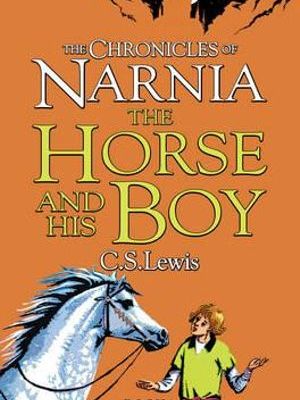
12. The Horse and His Boy by C. S. Lewis
A slave to royalty story. It’s also a story of God’s providential care. It’s very Arabian/Turkish/Muslimy. The Calormenes are basically Muslim culture. They have curved swords and wear turbans. When Shasta sees the Narnian lords making their way through Tashbaan he describes them as wearing steel or silver caps, some set with jewels, and one with little wings on each side of it. Those wings, I think, might be a nod from Lewis to the Polish Winged Hussars, who fought and defeated the Ottoman Muslim Turks at the Battle of Vienna on September 11-12, 1683.
Describing the Narnian royalty: “The swords at their sides were long and straight, not curved like Calormene scimitars. And instead of being grave and mysterious like most Calormenes, they walked with a swing and let their arms and shoulders go free, and chatted and laughed. One was whistling. You could see that they were ready to be friends with anyone who was friendly and didn’t give a fig for anyone who wasn’t. Shasta thought he had never seen anything so lovely in his life.” Among this royal entourage was Queen Susan, Lucy, and King Edmond. If I recall correctly, King Peter wasn’t there.
Shasta has this terrifying experience of sleeping in this graveyard, this tomb-yard. And a cat’s presence gave him solace. Aslan in a different form. “I’ll never do anything nasty to a cat again as long as I live,” said Shasta, half to the cat and half to himself. “I did once, you know. I threw stones at a half-starved mangy old stray. Hey! Stop that.” For the cat had turned round and given him a scratch. “None of that,” said Shasta. “It isn’t as if you could understand what I’m saying.” Then he dozed off. (p75) Later on a lion claws the girl. And before this we see lions chasing Shasta and Aravis.
Then later, Shasta and his horse Bree, and Aravis, a girl, and her horse Hwin, were rushing toward this monastery and a lion was chasing them. Shasta jumped off his horse without any weapon and confronted the lion which was tearing at Aravis’ shoulder or back. And the lion retreated momentarily. The hermit tells Shasta that he must keep going to warn King Lune of an advancing Calormene army. “If you run now, without a moment’s rest, you will still be in time to warn King Lune.” Shasta’s heart fainted at these words for he felt he had no strength left. And he writhed inside at what seemed the cruelty and unfairness of the demand. He had not yet leanred that if you do one good deed your reward usually is is to be set to do another and harder and better one. But all he said out loud was: “Where is the King?” (p. 116) A great portrait of sanctification. That suffering and stretching is something entailed in doing righteousness.
Bree’s shame at not running back in the right direction. (p. 119)
There’s an incredible moment toward the end of the book where Shasta is completely spent. He is on a horse that is exhausted. And he was walking in the dark. And he is stuck with terror because he senses a creature walking next to him. After a long time of fretting and trying to convince himself it’s just his imagination, he feels the creature’s warm breath on his cold hand. Even then he continued to move forward until he couldn’t bear it any longer. And he finally said,
“Who are you?”…scarcely above a whisper.
“One who has waited long for you to speak,” said the Thing. Its voice was not loud, but very large and deep.
“Are you – are you a giant?” asked Shasta.
“You might call me a giant,” said the Large Voice. “But I am not like the creatures you call giants.”
“I can’t see you at all,” said Shasta, after staring very hard. Then (for an even more terrible idea had come into his head) he said, almost in a scream. “You’re not – not something dead, are you?” Oh please – please do go away. What harm have I ever done you? Oh, I am the unluckiest person in the whole world!”
Once more he felt the warm breath of the Thing on his hand and face. “There,” it said, “that is not the breath of a ghost. Tell me your sorrows.”
Shasta was a little reassured by the breath: so he told how he had never known his real father o mother and had been brought up sternly by the fisherman. And then he told the story of his escape and how they were chased by lions and forced to swim for their lives; and of all their dangers in Tashbaan and about his night among the tombs and how the beasts howled at him out of the desert. And he told about the heat and thirst of their desert journey and how they were almost at their goal when another lion chased them and wounded Aravis. And also, how very long it was since he had had anything to eat.
“I do not call you unfortunate,” said the Large Voice.
“Don’t you think it was bad luck to meet so many lions?” said Shasta.
“There was only one lion,” said the Voice.
“What on earth do you mean? I’ve just told you there were at least two the first night, and-“
“There was only one: but he was swift of foot.”
“How do you know?”
“I was the lion,” And as Shasta gaped with open mouth and said nothing, the Voice continued. “I was the lion who forced you to join with Aravis. I was the cat who comforted you among the houses of the dead. I was the lion who drove the jackals from you while you slept. I was the lion who gave the Horses the new strength of fear for the last mile so that you should reach King Lune in time. And I was the lion you do not remember who pushed the boat in which you lay, a child near death, so that it came to shore where a man sat, wakeful at midnight, to receive you.”
“Then it was you who wounded Aravis?”
“It was I.”
“But what for?”
“Child,” said the Voice, “I am telling you your story, not hers. I tell no one any story but his own.”
“What are you?” asked Shasta.
“Myself,” said the Voice, very deep and low so that the earth shook: and again “Myself”, loud and clear and gay: and then the third time “Myself”, whispered so softly you could hardly hear it, and yet it seemed to come from all round you as if the leaves rustled with it.”
Shasta was no longer afraid that the Voice belonged to something that would eat him, nor that it was the voice of a ghost. But a new and different sort of trembling cam over him. yet he felt glad too. (p. 130)
Aslan eventually reveals himself as a Lion bigger than the horse Shasta was on. A great passage.
Aslan eventually reveals himself to Aravis. “The scratches on your back, tear for tear, throb for throb, blood for blood, were equal to the stripes laid on the back of your stepmother’s slave because of the drugged sleep you cast upon her. You need to know what it felt like.” (p. 158)
Shasta is the twin brother of Corin, the prince of Archenland, the son of King Lune. Shasta’s real name is Cor. Which I wonder if Lewis is deriving from the French word for heart. Coeur. There’s a moment where they defeat the Tashbaan king or general, Rabadash. And he is comically suspended from a hook on a wall. His shirt got caught on it. Later, Corin taunts him for this. And the king reprimands Corin. “Shame, Corin,…Never taunt man save when he is stronger than you: then, as you please.” (p. 169)
Aslan turns Rabadash into a donkey or an ass. Reminscient of king Nebuchadnezzar eating grass like cattle. And Aslan says justice will be mixed with mercy. And so we see Rabadash is humbled, and eventually healed. And that when the old Tisroc died, he became the new Tisroc, and we are told he was the most peaceable Tisroc Calormen had ever known. Again, this humanizing/dehumanizing theme.
King Lune describes what it means to be king. “For this is what it means to be a king to be first in every desperate attack and last in every desperate retreat, and when there’s hunger in the land…to wear finer clothes and laugh louder over a scantier meal than any man in your land.” (p. 174)
 Feller of Trees