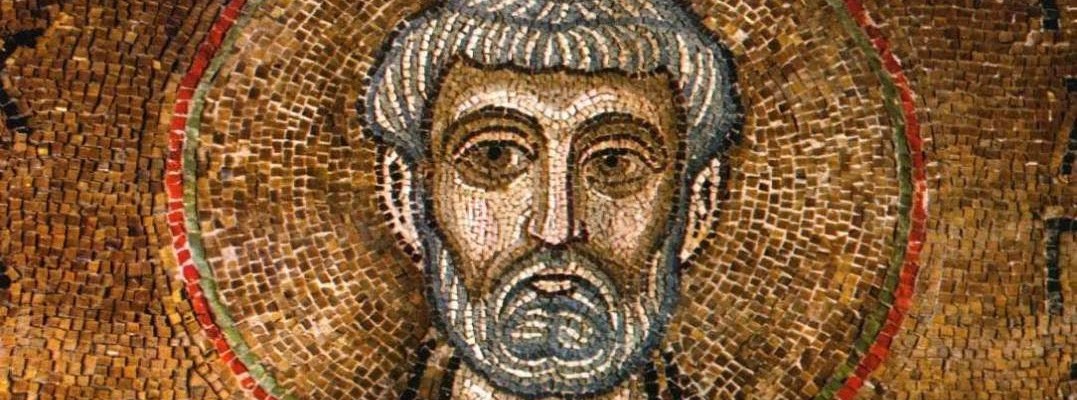


Clement is one of the earliest fathers, considered one of the chief apostolic fathers, along with Polycarp and Ignatius. He’s writing in the late first century. He’s an elder in Rome, but he’s writing to the Corinthians who have overthrown their elders. Paul mentions a Clement in Philippians 4:3, who is his fellow worker, and whose name is written in the Book of Life. It’s possible this is the same man. Clement is listed by Irenaeus and Tertullian as a bishop of Rome, specifically the 4th bishop of Rome, with Anacletus, Linus, and then Peter preceding him.
So, what’s of most interest to me currently is reading what a Pope is saying to a church that has overthrown its elders. I would argue there are noticeable things missing that one would expect a Pope to say. I’ll just go through a few of the things in the letter that stood out to me, not all of them relating to Protestant/Romanist relations.
Obeying God Rather Than Men
Clement warns against following seditious and prideful men.
“It is right and holy therefore, men and brethren, rather to obey God than to follow those who, through pride and sedition, have become the leaders of a detestable emulation. For we shall incur no slight injury, but rather great danger, if we rashly yield ourselves to the inclinations of men who aim at exciting strife and tumults, so as to draw us away from what is good.” Chapter XIV
This is interesting because it can be used by both Romanists and Protestants. The Romanist will point to this and say, see we shouldn’t follow schismatics like you Protestants did. And the Protestant will point to this and say, see we shouldn’t follow schismatics like you Romanists did. I obviously believe the Protestant has greater standing here. It is better to obey God rather than men.
The Phoenix
In talking of the resurrection, he mentions things in nature that testify to it. The rising of the sun every day. The dying and rising of a seed to produce fruit. And then he talks about the Phoenix.
“Chapter XXV The phoenix an emblem of our resurrection:
Let us consider that wonderful sign [of the resurrection] which takes place in Eastern lands, that is, in Arabia and the countries round about. There is a certain bird which is called a phoenix. This is the only one of its kind, and lives five hundred years. And when the time of its dissolution draws near that it must die, it builds itself a nest of frankincense, and myrrh, and other spices, into which, when the time is fulfilled, it enters and dies. But as the flesh decays a certain kind of worm is produced, which, being nourished by the juices of the dead bird, brings forth feathers. Then, when it has acquired strength, it takes up that nest in which are the bones of its parent, and bearing these it passes from the land of Arabia into Egypt, to the city called Heliopolis. And, in open day, flying in the sight of all men, it places them on the altar of the sun, and having done this, hastens back to its former abode. The priests then inspect the registers of the dates, and find that it has returned exactly as the five hundredth year was completed.”
It seems he is relating this creature as a natural fact rather than a myth, but either way he’s employing it as another sign of the resurrection.
Faith and Works
The way he speaks about faith and works is fantastic. He speaks the way the Bible speaks, without qualification.
“Let us clothe ourselves with concord and humility, ever exercising self-control, standing far off from all whispering and evil-speaking, being justified by our works, and not our words.” – Chapter XXX
Clement would be denounced as a federal vision heretic for saying such things in reformed circles. James would, too, I would imagine.
But later one of the chapter titles reads, “WE ARE JUSTIFIED NOT BY OUR OWN WORKS, BUT BY FAITH” (Chapter XXXII) And in another place he says, “The Lord, brethren, stands in need of nothing; and He desires nothing of any one, except that confession be made to Him.” – Chapter LII Excellent. Exactly as it should be. Speaking the same way as Scripture. Nobody is allowed to talk like the Scriptures do. Only specific passages are allowed to be repeated, especially when speaking of justification. So, it’s great to see Clement writing this way.
He goes on to say that our faith is the same justifying faith as the Israelites prior to Christ. So, we have a nascent covenantal theology here. And we have more affirmation of our justification being through faith, apart from anything in ourselves.
“Whosoever will candidly consider each particular, will recognise the greatness of the gifts which were given by him. For from him have sprung the priests and all the Levites who minister at the altar of God. From him also [was descended] our Lord Jesus Christ according to the flesh. From him [arose] kings, princes, and rulers of the race of Judah. Nor are his other tribes in small glory, inasmuch as God had promised, “Thy seed shall be as the stars of heaven.” All these, therefore, were highly honoured, and made great, not for their own sake, or for their own works, or for the righteousness which they wrought, but through the operation of His will. And we, too, being called by His will in Christ Jesus, are not justified by ourselves, nor by our own wisdom, or understanding, or godliness, or works which we have wrought in holiness of heart; but by that faith through which, from the beginning, Almighty God has justified all men; to whom be glory for ever and ever. Amen.” – Chapter XXXII, WE ARE JUSTIFIED NOT BY OUR OWN WORKS, BUT BY FAITH
In the next chapter, we see how much he is engrossed in Scripture. Essentially following Paul’s line of argumentation in Romans 6.
“What shall we do, then, brethren? Shall we become slothful in well-doing, and cease from the practice of love? God forbid that any such course should be followed by us! But rather let us hasten with all energy and readiness of mind to perform every good work.”
Fantastic.
Church Order
“LET US PRESERVE IN THE CHURCH THE ORDER APPOINTED BY GOD
These things therefore being manifest to us, and since we look into the depths of the divine knowledge, it behoves us to do all things in [their proper] order, which the Lord has commanded us to perform at stated times. He has enjoined offerings [to be presented] and service to be performed [to Him], and that not thoughtlessly or irregularly, but at the appointed times and hours. Where and by whom He desires these things to be done, He Himself has fixed by His own supreme will, in order that all things being piously done according to His good pleasure, may be acceptable unto Him. Those, therefore, who present their offerings at the appointed times, are accepted and blessed; for inasmuch as they follow the laws of the Lord, they sin not. For his own peculiar services are assigned to the high priest, and their own proper place is prescribed to the priests, and their own special ministrations devolve on the Levites. The layman is bound by the laws that pertain to laymen.” – Ch. XL
This passage is interesting because he appears to be mapping on old covenant structure to new covenant administration. High priest, likely being the bishop. Priests being the presbyters. And Levites being Deacons. It’s also possible he is referring to Christ as the high priest, bishops as the priests, and presbyters as the Levites, or more likely deacons as Levites, since later he mentions bishops and deacons together, which seems to suggest he is collapsing the bishop/presbyter into one office. He does refer to Christ as our high priest later in the letter. “through our High Priest and Protector, Jesus Christ,” – Ch. LVIII
The high language of appointed times and hours is noteworthy, as he says these came from the Lord’s commands. But we don’t see this in Scripture.
“The apostles have preached the Gospel to us from the Lord Jesus Christ; Jesus Christ [has done so] from God. Christ therefore was sent forth by God, and the apostles by Christ. Both these appointments, then, were made in an orderly way, according to the will of God. Having therefore received their orders, and being fully assured by the resurrection of our Lord Jesus Christ, and established in the word of God, with full assurance of the Holy Ghost, they went forth proclaiming that the kingdom of God was at hand. And thus preaching through countries and cities, they appointed the first-fruits [of their labours], having first proved them by the Spirit, to be bishops and deacons of those who should afterwards believe. Nor was this any new thing, since indeed many ages before it was written concerning bishops and deacons. For thus saith the Scripture in a certain place, “I will appoint their bishops in righteousness, and their deacons in faith.”” – Chapter XLII The order of ministers in the Church
This is a variation of Isaiah 60:17.
“I will also make your officers peace,
And your magistrates righteousness.”
Of note, he doesn’t mention a threefold ministry here. It’s bishops and deacons, which lends itself to the interchangeable nature of presbyters and bishops, which is the most natural way to read it in the New Testament.
There is also a kind of Apostolic succession of a sort. But nobody denies that the Apostles appointed men to be bishops and deacons.
Having mentioned that the Apostles would warn of strife and men who would quarrel over the episcopate, Clement says, “We are of the opinion therefore, that those appointed by them, or afterwards by other eminent men, with the consent of the whole Church, and who have blamelessly served the flock of Christ in a humble, peaceable, and disinterested spirit, and have for a long time possessed the good opinion of all, cannot be justly dismissed from the ministry. For our sin will not be small, if we eject from the episcopate those who have blamelessly and holily fulfilled its duties. Blessed are those presbyters who, having finished their course before now, have obtained a fruitful and perfect departure [from this world]; for they have no fear lest any one deprive them of the place now appointed them. But we see that ye have removed some men of excellent behaviour from the ministry, which they fulfilled blamelessly and with honour.”
He says that the appointment of presbyters has consent of whole church. Appointments come from other eminent men. Elders were faithful, so you can’t reject them. Which implies that unfaithful elders can be rejected.
The Scripture
Clement quotes a lot Scripture, especially the Psalms.
He emphasizes unity, and writes against schism. He quotes Jesus’ command not let little ones stumble. And while this can be applied to children, I am convinced that Clement is using it the way Jesus used it, as a reference first to his disciples and Apostles, and then as Clement uses it to overseers and deacons.
“Take up the epistle of the blessed Apostle Paul. What did he write to you at the time when the Gospel first began to be preached? Truly, under the inspiration of the Spirit, he wrote to you concerning himself, and Cephas, and Apollos, because even then parties had been formed among you. But that inclination for one above another entailed less guilt upon you, inasmuch as your partialities were then shown towards apostles, already of high reputation, and towards a man whom they had approved. But now reflect who those are that have perverted you, and lessened the renown of your far-famed brotherly love. It is disgraceful, beloved, yea, highly disgraceful, and unworthy of your Christian profession, that such a thing should be heard of as that the most stedfast and ancient Church of the Corinthians should, on account of one or two persons, engage in sedition against its presbyters. And this rumour has reached not only us, but those also who are unconnected with us; so that, through your infatuation, the name of the Lord is blasphemed, while danger is also brought upon yourselves.” – Chapter XLVII
Clement points them to Scripture. He says Paul wrote under inspiration of the Spirit. The Corinthians are engaging in similar factionalism as when Paul wrote to them.
The Authority of Rome
He says the rumors had reached those unconnected with us. This is an interesting phrase to use because it’s not one I would expect the Bishop of Rome to say about other churches.
In another place he says,
“Let us then also pray for those who have fallen into any sin, that meekness and humility may be given to them, so that they may submit, not unto us, but to the will of God.” – Ch. LVI
Again, not something I would expect the bishop of Rome to say.
 Feller of Trees