

Summary
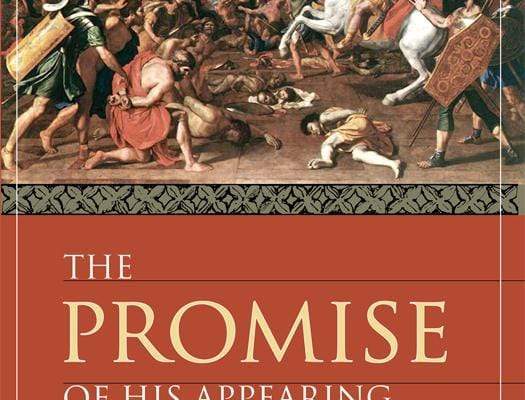
I led a Bible study on 1 and 2 Peter two summers ago. So, I acquired a few commentaries to prepare. One of the commentaries was R. C. Sproul’s which was standard and okay. But this book, which Leithart calls an exposition, was far more helpful. Essentially, Leithart makes a strong case for a preterist interpretation of these letters. His case is so persuasive that one might call it a Michael Jordan slam dunk. Or perhaps a Mike Tyson Knock Out. He does, after all, use a boxing metaphor throughout.
The Five Knock-Down Arguments
Leithart delivers five “knock-down” punches, or arguments, that form the shape of the book.
1. The first argument. Peter’s second letter deals with the coming of Jesus, which Peter says is also a theme of his first letter. In Peter’s first letter (1 Peter), he teaches that the coming of Jesus is imminent. This imminent coming of Jesus must be the same looming event that is discussed in 2 Peter.
2. The second argument. The reliability of the promised coming of Jesus is affirmed by the Transfiguration. In every Synoptic, after the Transfiguration Jesus says that he would “come” within the life-time of some of his disciples. This same prophecy is elaborated upon in the Olivet Discourse. In both the Transfiguration prophecy and the Olivet Discourse prophecy Jesus places their fulfillment within the lifetime of his hearers. So, for Peter to reference the Transfiguration, likewise, is placing the soon coming of Christ in the lifetime of the Apostles.
3. The third argument. Peter explicitly says the destruction of false teachers is coming “soon.” Their destruction is the same event as the destruction of the present heavens and earth. If the destruction of the false teachers was coming soon, so was the destruction of the present heavens and earth, and the coming of the new heavens and earth.
4. The fourth argument. Peter responds to mockers who doubt the promise of Jesus’ soon coming because of how much time has passed. If there were no imminent time limit on the prophecy, the mockers wouldn’t have been able to get traction with their mockery, and wouldn’t have been able to persuade people to their skepticism. Therefore, the original prophecy must have had a time limit, and that time limit was the lifetime of the Apostles.
5. The last argument is a variation on the others. The mockers are saying the fathers are falling asleep and Jesus hasn’t yet come. This form of mockery assumes that the coming of Christ is connected in some way to passing away of the fathers. The fathers in this context meant the apostles and their associates. Some of them were passing away, as others were getting older and close to their own departure, like Peter. And so, this again supports the idea that there was an imminent time limit, and in true Yahweh fashion, God waits until the last possible moment.
Those are the contours of the book. Leithart does a superb job of supporting his reading in such a short space.
God Saves His People
Permit me to share with you a few quotes from the book.
“The main point, of course, is that the readers of Peter’s letter find themselves in a situation similar to Noah and Lot. They are surrounded by wicked people, and especially by false teachers. This is their ‘trial’ (v. 9), and the Lord will rescue them just as he rescued Noah and Lot, by destroying their enemies and giving them a way of escape. Peter wants his readers to seek safety in the new ark that is currently under construction, the Christian church, and in flight from the Sodomite city that is about to be destroyed.” (p. 73)
One Day is As A Thousand Years
Leithart ends the book with a masterful correction to the commonly tortured and misunderstood statement by Peter that “with the Lord one day is as a thousand years, and a thousand years as one day.” (2 Peter 3:8)
Leithart says, “[This verse] has been seen as undermining the sense of imminence we find elsewhere in the letter and in the rest of the New Testament. With his reference to the “time” of God, Peter is said to “transcend” the scrupulous (and rather lowbrow) concern about timetables. In essence, this line of argument is gnostic. God is a God of timetables, the God who revealed a calendar to Israel with very specific dates, who promised to redeem Israel from Egypt four hundred years after Abraham, who brought Israel out in the fourth generation, who delivered the Jews from Babylonian captivity after seventy years, and who then promised to send Messiah after an additional ‘seventy weeks of years.’ Scripture, and the God revealed in Scripture, is concerned with specific times and seasons. When He says He will do something within a period of time, He will do it. That is what it means to be God.
Apart from these global theological issues, it is highly unlikely that Peter would respond to mockers by dodging (or ‘transcending’) the question of timing. As we have seen, the whole dispute about the Parousia is about its timing: Jesus promised to come before the apostolic generation had passed, but now the fathers are falling asleep and Jesus is nowhere to be found. If Peter suddenly offered an argument that avoided the question of timing, he would be playing into the mockers’ hands. They would respond with even deeper skepticism, since they would conclude that, as far as the apostle Peter is concerned, statements about time are not statements about time. We can be fairly confident that, if the letter is coherent at all, Peter is not doing this.
Instead, Peter is responding to the delay of the Parousia with two arguments. The first is from Psalm 90:4. The Psalm of Moses is a meditation on the contrast between God’s eternity and the brevity of human life. What is a long time for man is only yesterday for God. He has all the time He needs; He is not so much timeless but, as Robert Jenson puts it, time-ful. How does this respond to the mockers? Peter is not emptying temporal statements of meaning; he is not saying that Jesus might be interpreted as saying that the Parousia would not happen for millennia. Nor is he saying that ‘this generation’ might actually mean ‘the rest of world history’ or that ‘some of you standing here will not taste death’ might actually mean ‘all of you standing here will taste death.’ Rather, Peter is saying simply that what appears to be a lengthy delay to us is nothing to God. Peter is making no comment [or amendment] here about the timing of the Parousia, for he wrote the entire letter to insist that the timing will be just as Jesus promised.
This goes hand in hand with the second response, in verse 9. The Parousia is ‘delayed’ because God is being patient. In 1 Peter, Peter has already referred to the patience of God in the time leading up to the flood. God gave Noah time to build an ark and He gave the wicked time to repent or harden themselves. God’s ‘delay,’ which is not a delay at all, is an opportunity for repentance and also fills up the fullness of the sins of the Canaan. The Lord is patient toward ‘you,’ the believers to whom Peter is writing. He is patient toward them so that they can get their act together, so that none perish but all come to repentance. False teachers, and those whom they have led astray, should not harden themselves; judgment will come, but God is giving them time to turn around. Far from supporting the mockers’ skepticism, the apparent delay is designed to give them a chance to renounce their skepticism.” (pp. 103-104)
Fantastic book. Highly recommend.
 Feller of Trees