

Introduction
The Exorcist is a fantastic film for multiple reasons. It is subversive to modern women. It overthrows the religion of science and modern medicine. And it shows the power of Christ’s agape love.
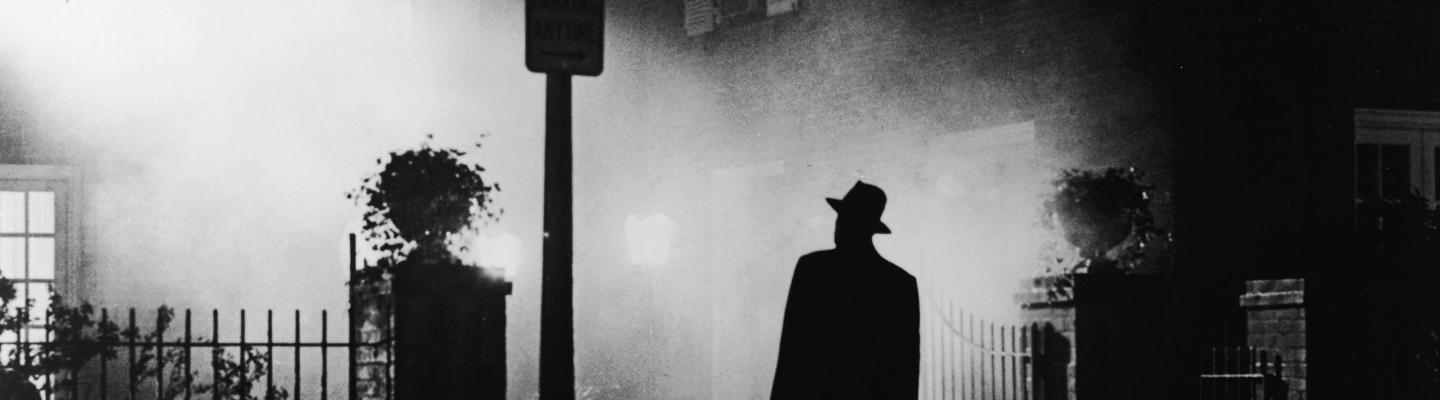
The Exorcist is a horror film that came out in the early 70’s. It’s considered one of the most classic horror films of all time.
The film is based on a novel from William Peter Blatty, who was the son of Roman Catholic, Lebanese immigrants. His mother was deeply Roman Catholic and it shows in the film.
Many horror films are not worth watching because they consist of the grotesque and the horrific for the sake of the grotesque and horrific. As a Christian and a pastor, I would say it is unhealthy to have a fascination with the horrific, the macabre, and the grotesque. We have not been given a spirit of fear, but of power and love and self control (2 Timothy 1:7). Speaking of wisdom, The Proverbs say, “all who hate me love death.” (Proverbs 8:36) And in this All Hallows’ Eve season we have seen our culture of death externalize its love of death with their ritual veneration of evil.
However, the horrific does exist. Demonic possession does exist. It is part of the human experience. And so we should expect Christians to make horror films that are good horror films. I think The Exorcist fits the bill. The Exorcist was quite surprising to me in that it was not a movie of fear for the sake of fear. It has the horrific and grotesque at moments. But it’s not the focus or the point of the film. The film is not catering to an audience who are in it for shock value or to simply be frightened.
I don’t know what Blatty or the director William Friedkin wanted to convey, but I found The Exorcist to be a great example of what a good horror film looks like. And by good I mean it’s Christian, as anything that is good is going to have the fingerprints of the source of all that is Good, Beautiful, and True on it. The Exorcist, particularly, is subversive to some of the evil aspects of modern culture.
The Modern Woman
So what do I mean? One of the more subtle themes, but certainly a present theme, is that of father hunger or fatherlessness. We are introduced to a single mother who is an actress, Chris Macneil, and her daughter, Regan Macneil, living on their own in Washington DC. She is the quintessential modern woman. Single mother. Actress. The film is not heavy handed in communicating that Chris is separated from her husband. But we are informed of this. Regan seems like a happy, normal, child. We see that Chris shows Regan affection and Regan loves her mother. At one point Regan asks her mother if she is going to marry a man who comes over to their house from time to time. Chris shrugs it off. Later, this man is found dead down a stairwell below Regan’s second story window, with his head turned backwards.
But what we have here is a single, working mother who no longer has the headship of her husband in the home, or the headship of elders in the Church, as she is not a church-goer. At one point, Regan overhears her mother cursing over the phone about her estranged husband for not calling to talk to Regan. Chris is in a frenzy, cursing, at the top of her lungs. All the while Regan is listening.
In another scene, Chris finds out that while she is at work, Regan has been at home playing with a Ouiji board. It’s implied that the Ouiji board is the medium by which a demon enters the home and ultimately Regan herself. This demon begins to possess Regan by degrees. Regan begins doing all kinds of weird, unnatural, disturbing things. The father is absent, and the snake has entered the garden.
Modern Medicine
Chris takes Regan to a family physician. Something is wrong with my child, let’s put them on drugs. Chris is the modern woman. The doctor does a test. We see a glimpse of the demon manifest in Regan at this point. The doctor asks if Regan is depressed. Chris is surprised he would ask. The subtext of the Dr.’s question is that Regan is depressed because her dad isn’t around. The doctor may have asked if Chris was divorced, or if the father was present. I can’t remember. But the doctor is ultimately not able to help her. So, he suggests going to specialists.
These specialists take a brain scan of Regan. The giant brain-scanning instrument is almost as horrific as the demon. An interesting comparison, which I think is deliberate. Regan is stressed and frightened while these tests are happening. The specialist find nothing wrong with her brain.
Chris takes her to more specialists. Nothing.
Then Chris brings in a psychiatrist, thinking it’s not a physiological issue, but a psychological issue. The psychiatrist can’t do anything, except for being attacked by the demonically possessed Regan.
Chris finally takes Regan to a team of doctors and medical specialists and they don’t know what to do, but they suggest that an exorcism might work. To their thinking, if the possession is just a mentally induced state, perhaps the power of suggestion through a ritual like exorcism might provide a mentally induced cure.
Chris finds this ridiculous. She is bewildered and shocked that nobody can tell her what’s wrong with her daughter. Chris’ bewilderment shows that the modern world and naturalistic assumptions are insufficient to deal with spiritual realities. But since she is out of options she finds a priest whom she’d seen in her neighborhood and asks him to do an exorcism. Fr. Damien Karras.
The Reluctant Priest
Fr. Karras is essentially an unbeliever. He’s a Jesuit and a highly educated psychologist or psychiatrist. We see that he is attempting to leave the priesthood. He recognizes that he is no longer fit to be a man of the cloth. He doesn’t believe anymore. And so he must go.
But then comes this desperate woman begging for his help. And he reluctantly agrees.
Fr. Karras examines Regan and eventually concludes she would likely qualify for an exorcism, but he remains skeptical. The Roman Church grants his request for an exorcism as long as an older seasoned priest oversees it. Enter Fr. Lankester Merrin.
Fr. Merrin is seen at the beginning of the film at an archeological dig in the middle east. And he unearths some demonic idol. As its unearthed we see dogs fighting with each other in the background. Somehow, the unearthing of the idol simultaneously unearthed this demon. And somehow the demon appears later in DC. Perhaps the idol was taken to a museum in DC. I don’t think the movie explains the how. But we do see that whenever this demon makes itself present, feuding occurs. For example, when the demon manifests in Regan at the doctor’s office we see two young boys fighting with each other in the waiting room, like the dogs feuding in the middle eastern desert. There may have been more examples of this, but I don’t remember.
Fr. Merrin and Fr. Karras begin their exorcist work on Regan. Over time Fr. Karras starts to believe again. Regan’s manifestations are so undeniably supernatural that it would be next to impossible to remain a skeptic or naturalist. At times she levitates or the entire bed levitates. Things like this. Through this horrific supernatural manifestation, Fr. Karras returns to God.
Sacrificial Love
The exorcism rituals and ceremonies have only a slight affect on the demon. But they ultimately don’t work. This is an interesting, and perhaps subversive point concerning mere ritual and ceremony. Because what ultimately does work is Christ-like sacrificial love. The demon eventually kills Fr. Merrin. And in the culminating scene of the film, Fr. Karras grabs Regan and with a loud voice, says, “Come into me! Come into me!” And the demon leaves Regan and enters into Fr. Karras, and at that same moment Fr. Karras then throws himself out of the window, killing himself. He sacrifices himself for the sake of this little girl. He dies for the afflicted. He takes on the affliction of Regan and frees her of it through his own sacrifice of love. “Greater love has no one than this, than to lay down one’s life for his friends.” (John 15:13)
At the bottom of the staircase below Regan’s window, as Fr. Karras is dying on the ground, a fellow priest finds him and asks, “Do want to make a confession?” Fr. Karras can’t speak, but squeezes the priests hand to communicate, “Yes, I do.” And the priest asks, “Are you sorry for having offended God and all the sins of your past life?” And Fr. Karras again squeezes his hand. And the priest then declares absolution to him before Fr. Karras dies. Just a fantastic scene.
In the final scene, Regan and her mother are moving out of their house. They see Fr. Dyer, the priest who absolved Fr. Karras. Regan’s mother shakes Fr. Dyer’s hand and says goodbye. But Regan looking intently at Fr. Dyer’s clerical tab, embraces Fr. Dyer and kisses him on the cheek. The fatherless Regan recognizes with gratitude what the Father had done for her. A fantastic end to the film.
 Feller of Trees