

Introduction and Overview
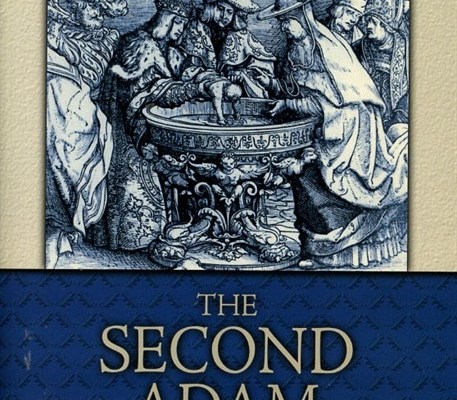
At the top of the list comes another work on baptism. Michael Ferrebee Sadler was an Anglican priest in the 19th century. I don’t know a lot about him, but he seems to be something of an Old High Churchman. The 19th century of course witnessed the Tractarian and Oxford Movements. These movements were something of a ressourcement of patristic and medieval theology and practice. It was a catholicizing movement. There were good elements and bad elements to it, in my view. I don’t know to what extent Sadler was influenced, involved, or sympathetic to these movements, but he does quote Edward Pusey in this work, and Pusey is a good guy in the Oxford Movement. In any case, Sadler inhabits one of my favorite spaces – the bridge between reformed and catholic theology. And in this work he is merging the reformed emphasis on predestination with the catholic emphasis on the sacraments – it’s essentially a recovery of Augustine.
Every tradition has its own catholicizing movement. In the Reformed world there have been two catholicizing movements, the Mercersburg Theology of John Nevin and Philip Schaff in the 19th century, and the Federal Vision movement of Doug Wilson, Peter Leithart, Rich Lusk, and others around the beginning of the 21st century. Rich Lusk, a Presbyterian, writes the preface to the book edition I have of The Second Adam & The New Birth. It is through Athanasius Press that it was published, which I believe is associated with Steve Wilkins at Church of the Redeemer in Monroe, Louisiana, which of course, used to be Auburn Avenue Presbyterian Church, and was ground zero of the Federal Vision conversation. So, you have these Presbyterians publishing works from high church Anglicans. An excellent example of reformed catholicity.
In this book, Sadler is making similar arguments that I encountered in the Federal Vision discussion. Federal Vision guys liked to affirm the objectivity of the covenant. Sadler is doing just that except with regeneration. Affirming the objectivity of regeneration in baptism. Sadler’s argument is simply what Paul says in Galatians. “For as many of you as were baptized into Christ have put on Christ.” (Gal. 3:27)
Sadler deals with all the same debates that still occur today over baptism, regeneration, predestination, and apostasy. One of the more helpful distinctions he makes is between conversion and regeneration. Regeneration occurs in the waters of baptism. But conversion, where a man’s heart is turned toward God, and he repents of his sin, is something that can happen before baptism, and something that happens daily for the Christian. The Christian must live a life of daily conversions, daily repentance. These category differences I think help clear up a lot of the debate.
Rich Lusk’s Preface
Pastor Rich Lusk is part of the CREC, a Presbyterian denomination with Anglican leanings. Lusk gives a great preface to this work.
“Sadler writes from within the Anglican tradition, but he is perhaps best regarded as an Augustinian Christian, or a Reformed Catholic. The hallmark of Augustinianism is a theological combination of sovereign grace with a high doctrine of sacramental efficacy. Since the Reformation, these two aspects of biblical teaching have appeared to be in tension, with Romanists choosing the sacraments and Calvinists choosing predestination. But in reality; predestination and sacramental efficacy are fully compatible, as Sadler argues.” (p. iii)
This greatly summarizes the book.
Lusk gives another good summary:
“Sadler is an astute biblical theologian. He grasps the two-Adams architecture of the biblical narrative. Union with Adam is the root of original sin; regeneration into Christ, the Second Adam, is the answer. Regeneration is understood by Sadler primarily as an objective, redemptive-historical reality, synonymous with the kingdom of God. Like Calvin, Sadler focuses soteriology on union with Christ, rather than discrete particles of an ordo salutis. And like Calvin, he views Israel’s covenant as a typological forerunner of the Church’s new covenant. The structure of the covenant, in terms of promise/demand and blessing/curse, remains the same, even though these things have been intensified in the new age.” (p. vi)
Are You Born Again?
Alright let’s hear Sadler in his own words. Sadler gives a summary overview of 1 Corinthians. Then we read this.
“First, then, let it be observed that St. Paul’s mode of addressing nominal Christians exactly answers to the way in which the Prophets treated nominal Jews. In both the one case and the other, the real communication of the privileges of the respective covenants was insisted on, to convince those under the covenant of their greater sin in not living to the covenant blessings and obligations.
The covenant blessing of which the Corinthian Christians had been made partakers – an engrafting into Christ’s body in Baptism – was an infinitely greater spiritual blessing than that received by the Jewish child at his circumcision; and yet, in one important respect they answered to one another – they laid the recipient, in each case, under obligations of which we could never direct himself, and which he might receive to his greater condemnation.
Now, it is quite conceivable that he might have spoken in very different terms to the nominal Christians among the Corinthians. He might have said to them: ‘By your divisions, and the unreproved fornication of some among you, and the idolatry of others, and by your scandalous profanation of the Lord’s Table, and by your want of charity, and your vain-glorious display of spiritual gifts, and by your denial of such a fundamental article of the faith as the resurrection, you plainly prove that many among you are not the members of Christ, and never have been. By one Spirit ye have evidently not all been baptized into one body. Ye may have been baptized with water, but that has clearly never brought such as you into the body of Christ.’
What a contrast do his actual words present! We find no expressions of doubt or hesitation respecting the Corinthians having all received grace; ‘Know ye not, that your bodies are the temples of the Holy Ghost which is in you,’ ‘Ye are the body of Christ.’
The reader will observe, also, how impossible it is to suppose that the Apostle addressed his converts on some unreal hypothesis, or imaginary charitable assumption, that they were members of Christ, when in reality they were not; for he intimates in all the expressions to which I have directed attention, that the sin of the Corinthians was immeasurably enhanced by the fact of their actually having been made members of Christ. The charitable assumption or hypothesis would have been to assume that they were, in reality, not in that state of grace which made their sin the more sinful.
When we hear of a person bearing an honourable name and belonging to a noble family, disgracing himself, we charitably hope and assume (till we are made sure one way or another) that such a person is not a scion of the noble stock. When a person disgraces the Christian name, the charitable hypothesis would be to assume that such a person neither is, not has been, in a state of grace, for the more he has received the more he is answerable for.” (Ch. 6. pp. 70-71)
Sadler is showing us that the Prophets and the Apostles don’t talk like evangelicals or baptists or even modern day Calvinists for that matter. The Apostle is not saying, “You Corinthians aren’t really Christians, and so you must be born again. Rather, he is saying because you are Christians, you must repent of these sins.”
Regeneration and Conversion
Sadler on Regeneration:
“Being thus brought into union with Christ we are ‘born again.’ A new birth implies not so much a change of heart as a change of family. We are brought into a new family of which we become members and are entitled to the present privileges and future prospects of the members of such a family: and looking upon this new or second birth as contrasted with our old or first birth into the family of Adam, it implies that we are born into or made members of a New Man – The Second Adam.” (Ch. 20. p. 221)
Having associated regeneration or being born again with baptism, one may ask, “What does Sadler call that deep, heart-felt, change of heart, that is popularly called regeneration?” The answer: Conversion.
Sadler says that ‘repentance’ is the better term to use, but he will continue to use conversion as it is popularly understood. Sadler writes, “In this chapter and in chapter three I use the word ‘conversion’ in its popular acceptation, as synonymous with true repentance and a change of heart. Let it, however, be distinctly understood, that the word used for the needful change throughout the New Testament is not ‘conversion,’ but ‘repentance’ (metanoia[transliteration my own]).
The word ‘conversion’ occurs but once in the New Testament, in Acts 15:3- ‘declaring the conversion of the Gentiles.’ It is, consequently, never applied to designate the repentance of a baptized sinner. The necessary change in a sinful Christian is always called repentance (Rom. 2:4; 2 Cor. 7:9-10; 2 Tim. 2:25; Heb. 6:1, 6; 12:17; 2 Pet. 3:9): and no marvel; for repentance is by far the deeper word of the two, if we look to its derivation. It always signifies an internal change, whereas the verb translated once or twice by convert (epistrepsein [transliteration my own]) merely signifies turning – turning round or turning back in the middle of a walk. It primarily refers to an external action, and it scarcely ever loses entirely its external signification. It is the word used when it is said of our Lord that He ‘turned him about in the press’ (Mark 5:30. In James 5:19-20, it is spoken respecting turning from the error of a way: ‘If any do err (or wander) from the truth, and one convert,’ or ‘turn him’ – still keeping up the external idea of a way, and turning in it. I do not, in writing the above, discard the conventional use of this word ‘conversion.’ In one place, Luke 22:32, it seems synonymous with repentance. I merely wish to show that ‘repentance’ is of the two by far the deeper, truer, and more Scriptural term.” (p. 171, footnote)
Unworthy Reception of Baptism
Sadler gives a helpful, and Scriptural way, of understanding false converts.
“It may be well here to say a word or two respecting the unworthy reception of Baptism by an adult. I cannot see any difficulty in it which is not satisfactorily cleared up by the Scripture similitude of the ‘graft’ (Rom. 11:17-24). Baptism, no matter what the state of heart of the recipient, at once brings the baptized into contact (if I may use the expression) with the highest powers of the unseen world. In some infinitely mysterious way the human graft there and then comes into contact with the new stock of humanity – The Second Adam.
If there be faith in the person baptized, he, at once, begins to partake of the root and fatness of the Divine Olive-Tree, which, if he yields his will to it (Rom. 11:22-24; John 15:1-8). subdues to itself the whole inner man (1 John 3:6-9). If he has not faith, the saving efficacy of the grace of Christ enters not into him; nevertheless he is, all the same, brought into contact with the True Vine, but to his condemnation. His unbelief is the obstacle to the grace of the Saviour flowing into him. Christ would, but cannot, heal him, because of his unbelief (Mark 6:5-6).” (Ch. 14. p. 137)
Conclusion
The entire book is fantastic. Sadler talks about God’s covenants being both conditional and unconditional. He debunks this idea of an invisible church. He gives many quotes from giants in the faith throughout Church history who have affirmed baptismal regeneration, and also that Jesus’ teaching on being born again in John 3 is about baptism. He also has an entire chapter that puts biblical texts asserting election to grace side by side with texts asserting man falling away from grace.
Sadler walks us through the Bible showing us very persuasively how the Scriptures teach baptismal regeneration, infant baptism, predestination, and also that regenerate Christians can fall away, that not all regenerate Christians are given final perseverance.
There is so much that’s great in this book. It’s great because Sadler is biblical, historical, and clear. Fantastic work. Highly recommend.
 Feller of Trees