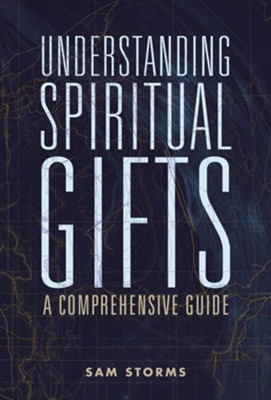


This is a good book. I think more work can be done in this area, but it’s great to see intelligent, academically minded men, taking the gifts of the Spirit seriously, and giving a serious defense of their utilization.
I’ll share a few passages from the book.
Teachers and Prophets
Here’s an example of Dr. Storms giving us helpful distinctions between prophets and teachers.
“Prophets may prophesy at will, but they only receive revelation by the initiative of God. Thus, more so than with the gift of teaching, prophets are somewhat passive, being instruments or conduits for the revelatory word of God, whereas teachers are more active, drawing directly from the Scriptures and expounding what they interpret. This is, in fact, the primary distinction between the prophetic gift and the teaching gift: the former is dependent on a spontaneous revelation while the latter is dependent on an inscripturated text.” (p. 169)
Disparity in Potency
Some cessationist critics will point to a disparity in the miraculous of the Apostolic era and our own era. Whether or not this is true, Storms quotes Andrew Wilson, who grants the observation and gives a very common sense rebuttal as to why this isn’t sufficient reason to deny the continuation of all the gifts of the Spirit.
“Yes, the apostles were more successful at healing than we are. There is, indeed, a discrepancy between our experience and what’s described in the New Testament. But the apostles were also more successful at evangelism. And church planting. And leadership. And cross-cultural mission. And church discipline. And teaching. And standing firm under persecution. And handling disappointment. Yet in none of these cases do we conclude that the gulf is so wide, their ‘success’ so much greater than ours, that to write a book telling people how to share the gospel, or teach, or lead more effectively, is to encourage people to be satisfied with sub-biblical Christianity. Rather, we acknowledge disparity, and seek to learn from it. What did they do? What can we learn? What are we missing? Which contemporaries of ours is God using in this area at the moment? What can we learn from them? And so on.
This is also the most charismatic response, in the best sense of that word: it is the response that places the strongest possible emphasis on charisma, on gift. Some people’s healing and prophetic gifts, like some people’s evangelistic and leadership and pastoral gifts, are more developed than others. I see fewer people healed than my friend Simon Holley, who sees fewer people healed than my friend Simon Holley, who sees fewer people healed than Heidi Baker, who sees fewer people healed than Peter, who saw fewer people healed than Jesus. When I preach gospel, fewer people come to faith than when my friend Adrian Holloway does, who sees fewer people come to faith than when Billy Graham did. My teaching gift isn’t John Piper’s, and his isn’t John Calvin’s, and his isn’t Paul’s. Gifts vary. ‘As it is, God arranged the members in the body, each one of them, as he chose’ (1 Cor 12:18).
So is there a discrepancy between the quality, quantity and immediacy of New Testament miracles and ours? Yes. Does that mean the miraculous gifts are not for today? No. Unless teaching is not for today either, that is. In which case, you probably shouldn’t be reading this in the first place.” (pp. 108-109)
The Evidence from Church History
Storms has an excellent chapter dedicated to cataloguing the charismatic gifts throughout history. He focuses extensively on the early fathers, but also goes over the Medieval era, and the Reformation era.
One example. In the early stages of Augustine’s ministry, he espoused some form of cessationism, but later in his ministry, Storms draws our attention to his writings in the City of God, where Augustine carefully documented no fewer than seventy instances of divine healing in his own diocese over a two year span. (City of God 22.8-10)
After describing numerous miracles and even resurrections from the dead, Augustine says,
“What am I to do? I am so pressed by the promise of finishing this work, that I cannot record all the miracles I know; and doubtless several of our adherents, when they read what I have narrated, will regret that I have omitted so many which they, as well as I, certainly know. Even now I beg, these persons to excuse me, and to consider how long it would take me to relate all those miracles, which the necessity of finishing the work I have undertaken forces me to omit.” (City of God, 22.8.489)
Very good book by Dr. Storms. I hope to see more Christian academics endeavoring to take up the continuationist mantle. Solidly recommend.
 Feller of Trees