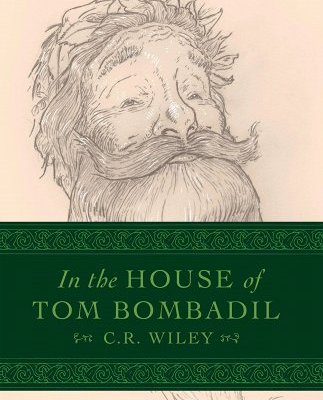


This is a good book. The preface is written by Brad Birzer, a history professor of my alma mater. In it he describes the book as “a work of deep Christian humanism.” I couldn’t agree more. Wiley is a Presbyterian who writes like a catholic. He is insightful without being long winded. He writes with eminently readable prose. While dealing with lofty things one is still at ease as they stroll this poetic meditation on dominion.
There is a lot of speculation on who Tom Bombadil is and the significance and meaning of his appearance in The Lord of the Rings. Wiley takes his time building up to what he thinks about Tom Bombadil, but when he steps up to the plate, I think he knocks it out of the park.
“I think Tom is the ending, as in a happy ending.
What does this have to do with dominion? Well, bless my beard, it’s the same thing! In the Bible God doesn’t lay down His dominion when He rests on the seventh day; He enjoys what He has made. And Tom’s dominion and his rest amount to the same thing.” (p. 100)
Wiley goes on to say this view perhaps seems unlikely because we encounter Tom at the beginning of the story. But this, Wiley says, is the genius of Tolkien. Seeing a glimpse of the end at the beginning. And isn’t this the way God has told the story of redemption? In the book of Genesis, we are constantly seeing glimpses of the end from the beginning, especially in God’s dominion rest.
Wiley gives this great assessment of Tolkien’s Leaf by Niggle to supplement his meditation on dominion:
“It’s a marvelous story, a consolation for makers, and rather than praising the next world at the expense of this one, Leaf by Niggle produces the opposite effect. It is because the world to come is more Real and Enduring than our world that our labors in this world matter. The next world infuses this one with meaning because, as the story suggests, in some sense our works in this world will follow us into the world to come.” (p. 93)
Wiley rightly notes that Tolkien is careful to distinguish between dominion and domination.
“Human beings possess power over all the creatures of the world. I suppose you could say we have a Ring of Power – whether we want it or not.
But dominion isn’t arbitrary power, at least not originally. In the Christian faith human dominion is subject to God’s dominion. And it is informed by God’s law – his moral standard, his holiness. We can’t just do as we please.” (pp. 60-61)
There is so much good in this book. Highly recommend.
 Feller of Trees