

Introduction
Is the Eucharist a sacrifice? Yes, it is. This is an extensive topic that could take up a lot of time, but I will attempt to be brief. And since this has historically been a point of bitter dispute, and since I don’t believe this needs to be a point of dispute at all, nor a doctrinal division between Christians, I will endeavor to give a brief defense of the Eucharist as a sacrifice.
The Prophetic Utterance of New Covenant Sacrifice
When the prophets tell us about the the coming New Covenant, they also tell us about a New Covenant priesthood.
The entire 33rd chapter of Jeremiah is about the New Covenant.
Nestled in the passage, Jeremiah says,
“For thus says the Lord: ‘David shall never lack a man to sit on the throne of the house of Israel; nor shall the priests, the Levites, lack a man to offer burnt offerings before Me, to kindle grain offerings, and to sacrifice continually.’ ” (Jeremiah 33:17-18)
David’s throne won’t lack a man to rule, nor will the priests lack a man to offer sacrifices. For our purposes, we see that if there are priests, then there are sacrifices, and these continue in the New Covenant.
Jeremiah goes on to say:
“Thus says the Lord: ‘If you can break My covenant with the day and My covenant with the night, so that there will not be day and night in their season, then My covenant may also be broken with David My servant, so that he shall not have a son to reign on his throne, and with the Levites, the priests, My ministers. As the host of heaven cannot be numbered, nor the sand of the sea measured, so will I multiply the descendants of David My servant and the Levites who minister to Me.’” (Jeremiah 33:20-22)
Again, a sacrificial priesthood continues and in fact multiplies in the New Covenant.
In the New Covenant, Isaiah tells us that the Gentiles will be incorporated into the People of God, and that they will offer acceptable sacrifices to God at his altar.
“Also the sons of the foreigner
Who join themselves to the Lord, to serve Him,
And to love the name of the Lord, to be His servants—
Everyone who keeps from defiling the Sabbath,
And holds fast My covenant—
Even them I will bring to My holy mountain,
And make them joyful in My house of prayer.
Their burnt offerings and their sacrifices
Will be accepted on My altar;
For My house shall be called a house of prayer for all nations.” (Isaiah 56:6-7)
Sacrifices at God’s altar will continue and be accepted in the New Covenant. Isaiah goes on to say in Chapter 66, that God will make foreigners priests and Levites:
“It shall be that I will gather all nations and tongues; and they shall come and see My glory…And I will also take some of them for priests and Levites,” says the Lord.” (Isaiah 66:18, 21)
In Malachi 1 we are told that the sacrifices of old covenant Israel will no longer be accepted, but the sacrifices of the New Covenant Israel will be accepted.
“Who is there even among you who would shut the doors,
So that you would not kindle fire on My altar in vain?
I have no pleasure in you,”
Says the Lord of hosts,
“Nor will I accept an offering from your hands.
For from the rising of the sun, even to its going down,
My name shall be great among the Gentiles;
In every place incense shall be offered to My name,
And a pure offering;
For My name shall be great among the nations,”
Says the Lord of hosts.” (Malachi 1:10-11)
The prophets saw that in the New Covenant Christ would reign on David’s throne, and that a priesthood would continue to offer sacrifices to God. So, despite aversion to the use of this language in the New Covenant by some Christians, we see that the prophets were not averse to the language of priests, sacrifices, and altars in the New Covenant.
The question then becomes what are those sacrifices and who are part of this continuing priesthood?
The Body of Christ as Jesus Himself
The continuing sacrifices and sacrificers all relate to the Body of Christ. There are three senses in which the Scripture refer to the Body of Christ.
- The Body of Christ as Jesus Himself.
- The Body of Christ as the Church.
- The Body of Christ as the Eucharist.
In the first sense, Jesus Himself is both the sacrifice and sacrificer of The New Covenant. This is the ground and foundation of everything in the New Covenant.
In Hebrews we read: “First he said, “Sacrifices and offerings, burnt offerings and sin offerings you did not desire, nor were you pleased with them”—though they were offered in accordance with the law. Then he said, “Here I am, I have come to do your will.” He sets aside the first to establish the second. And by that will, we have been made holy through the sacrifice of the body of Jesus Christ once for all. And every priest stands ministering daily and offering repeatedly the same sacrifices, which can never take away sins. But this Man, after He had offered one sacrifice for sins forever, sat down at the right hand of God, from that time waiting till His enemies are made His footstool. For by one offering He has perfected forever those who are being sanctified.” (Hebrews 10:8-14)
The old covenant priesthood is abolished. The sacrifices of bulls and goats aren’t what takes away sins, but that to which they foreshadowed. We might even call them Old Covenant sacraments that prefigured and were fulfilled in Christ’s once and for all sacrifice.
St. Peter also says, “For Christ also suffered once for sins…” (1 Peter 3:18)
And St. Paul also says, “For the death that He died, He died to sin once for all…” (Romans 6:10)
So, we affirm the Reformational objections to the late medieval errors, that Christ is emphatically not re-sacrificed in the mass. But Rome agrees with these Reformational objections to some extent. Even in the Council of Trent they affirm the once and for all sacrifice of Christ. “[Christ], our Lord and God, was once and for all to offer himself to God the Father by his death on the altar of the cross, to accomplish there an everlasting redemption.” (Catechism of the Catholic Church, 1366)
Christ as both sacrifice and sacrificer of the New Covenant is the Paschal Lamb and the High Priest of the New Covenant after the order of Melchizedek, as we read in Hebrews. He is our high priest. “For every high priest is appointed to offer both gifts and sacrifices. Therefore it is necessary that this One also have something to offer.” (Hebrews 8:3) And what he has offered is Himself on the altar of the cross.
The Body of Christ as the Church
And even though the Old Testament sacrifices have ended, and Christ has offered His sacrifice once and for all, we still see sacrifices continuing in the New Covenant.
We see this affirmed when St. Peter echoes Exodus 19 by saying that Christians are now a royal priesthood. (1 Peter 2:9) So, now we see a bit more clearly what the Old Testament prophets prophesied. Christians are now the new covenant priests. Priests offer sacrifices to God. What are they sacrificing? Peter says, “you also, as living stones, are being built up a spiritual house, a holy priesthood, to offer up spiritual sacrifices acceptable to God through Jesus Christ.” (1 Peter 2:5) Christians offer spiritual sacrifices, and they are acceptable to God only through Jesus Christ. We see the same thing affirmed in Hebrews. “Therefore by Him let us continually offer the sacrifice of praise to God, that is, the fruit of our lips, giving thanks to His name. But do not forget to do good and to share, for with such sacrifices God is well pleased.” (Hebrews 13:15-16) By Him, meaning by Christ, we as priests are to continue to offer the sacrifice of praise to God, the giving of thanks, and the doing of good. These are acceptable sacrifices to God only through the sacrifice of Christ.
And just as Christ is sacrifice and sacrificer, we too become sacrifice and sacrificer. Paul says, “present your bodies a living sacrifice, holy, acceptable to God, which is your reasonable service.” (Romans 12:2)
At this point, most Protestants would agree, but often democratize this understanding of a priesthood to all Christians. This is a true and good doctrine. And the priesthood of all believers applied as much to Old Covenant Israel as it does to New Covenant Israel, the Church. But just as Old Covenant Israel had ministers who led the sacrificial worship of Israel, so too, does the New Covenant Israel have ministers who lead the sacrificial worship of the Church.
In the new covenant there are those appointed to minister to the household of God, presbyters and overseers, and these are set apart in a way similar to the priests of the old covenant. They teach. They lead worship. They exercise judgment.
Just as God chose Twelve Patriarchs to form Old Israel, Christ chose Twelve Apostles to form the New Israel. And just as God chose ministers from the tribe of Levi to serve in God’s House, God chose ministers in the New Israel to also serve in God’s House. St. Paul compares New Covenant ministers to Levites.
“Do you not know that those who minister the holy things eat of the things of the temple, and those who serve at the altar partake of the offerings of the altar? Even so the Lord has commanded that those who preach the gospel should live from the gospel.” (1 Corinthians 9:13-14)
Perhaps St. Paul is merely applying a principle here, but the principle involved is one which is priestly in function.
St. Paul refers to himself as performing a priestly duty when he says, “But I have written very boldly to you on some points so as to remind you again, because of the grace that was given to me from God, to be a minister of Christ Jesus to the Gentiles, ministering as a priest the gospel of God, so that my offering of the Gentiles may become acceptable, sanctified by the Holy Spirit.” (Romans 15:15-16)
St. Paul is saying that his ministry to the Gentiles is one which involves offering the Gentiles to God as a sacrifice. That’s what an offering is.
But we know that the Levitical priesthood ended with the Old Testament as we read in Hebrews. But the perpetual priesthood we do read about is the Melchizedekian priesthood, where Christ is our high priest. And so the general pattern we see in the Old Testament continues in a new form. With Christ our high priest, and under-priests who minister in the House of God. These Melchizedekian priests are Apostles, Overseers, and Presbyters. The English word priest comes from the Old English preost, which comes from the Latin prestar, which comes from the Greek presbyteros. It also comes from the Greek hiereus, which Paul uses to describe his ministry.
The Christian Tradition, for a vast majority of its existence understood the overseers and elders of the Church to be New Covenant priests. I believe this is understood by good and necessary consequence, taking all of Scripture into consideration. I find little to no reason to dispense with this understanding. I could say more on this point, but I don’t want to stray from the purpose here, which is to show the sacrificial aspect of worship in the New Covenant, both in Biblical and extra-Biblical history.
The Body of Christ as The Eucharist
Now, how does all of this relate to the Eucharist? I would submit to you it is self-evident. In the very words of Institution, Christ says, “this is My body which is broken for you,” and “this is My blood of the new covenant, which is shed for many for the remission of sins.” (Matthew 26:28 The very nature of the Eucharist itself is one which is sacrificial. Anyone who has read the Old Testament, knows that this is the language of sacrifice. The shedding of blood for the remission of sins is lifted from the atonement sacrifices for sins. The institution of the Eucharist at Passover is the fulfillment of the Paschal Lamb sacrifice, which commemorated the liberation from Egypt, but now Jesus is reappropriating that sacrifice, or rather fulfilling what it pointed to – Himself, and our liberation from sin, the world, and the Devil. And He is instituting a New Covenant meal, like the Passover meal, where both entail the sacrifice of a lamb. In the New Covenant this is the Lamb of God, The Christ.
When Jesus instituted this rite, he gave thanks over the bread and the wine. We, too, also give thanks for the bread and the wine, the body and the blood of Christ. In this sense, we offer a sacrifice of thanksgiving. In Hebrews we read, “We have an altar from which those who serve the tabernacle have no right to eat.” (Hebrews 13:10) What else could this be but the Eucharistic offering? Those who rejected Christ’s sacrifice cannot eat from His altar. In connection to this, the author of Hebrew concludes: “Therefore by Him let us continually offer the sacrifice of praise to God, that is, the fruit of our lips, giving thanks to His name.” (Hebrews 13:15) The fruit offered here is our very words that spring out of a heart of thanksgiving. This is directly opposite to the gentiles who knew God, but did not give thanks to God. The new humanity continues to offer a sacrifice of thanksgiving to our Creator, because our Creator has granted us salvation through His Son. And this is ritually shown forth in the Eucharist as Christ commanded us to do.
This is another sense of sacrifice. That it is a memorial sacrifice. In the Eucharist, we proclaim or show the Lord’s death until He comes. St. Paul says, “For as often as you eat this bread and drink this cup, you proclaim the Lord’s death till He comes.” Jesus says, “This do, as often as you drink it, in remembrance of Me.” This proclamation of the Lord’s death is a memorial sacrifice. The word for remembrance in Greek is anamnesis, and much has been said about this word means, but I will simply say that this word appears four times in the Septuagint, and all of them are memorials shown forth to God.
In Numbers 10:10 we read, “in the day of your gladness, and in your solemn days, and in the beginnings of your months, ye shall blow with the trumpets over your burnt offerings, and over the sacrifices of your peace offerings; that they may be to you for a memorial before your God:” (KJV) These are sacrifices offered to God, and they are set as a memorial before God. Some translations will emphasize the remembrance being directed toward the Israelites. I see no reason to take issue with either translation, as the memorial is set before both the Israelites and God. In the passage, trumpets are played over the sacrifices and offerings. This, we may take as a figure of God’s word. And so, in the Eucharist the sacrament is accompanied with God’s word, both the sermon and the words of Institution and the Epiclesis. Word and Sacrament always go together. We proclaim God’s word like a trumpet over the memorial peace offering of the Eucharist.
Anamnesis appears in connection to the showbread.
“And you shall take fine flour and bake twelve cakes with it. Two-tenths of an ephah shall be in each cake. You shall set them in two rows, six in a row, on the pure gold table before the Lord. And you shall put pure frankincense on each row, that it may be on the bread for a memorial, an offering made by fire to the Lord. Every Sabbath he shall set it in order before the Lord continually, being taken from the children of Israel by an everlasting covenant. And it shall be for Aaron and his sons, and they shall eat it in a holy place; for it is most holy to him from the offerings of the Lord made by fire, by a perpetual statute.” (Leviticus 24:5-9)
This, as with all the Old Testament sacrifices and rituals, are fulfilled in Christ, and the memorial aspect is fulfilled in the ritual offering of the Eucharist. As Christ says to “Do this in memorial of me.” And so what is described in Leviticus as a perpetual statue and everlasting covenant continues in a transformed way into the New Covenant with the Eucharist. The showbread was also accompanied by frankincense, this we can take as the prayers of God’s people in the New Covenant, and it’s also one reason why traditional Christian worship involves incense and the priest will cense the altar before the Eucharist.
Anamnesis is also used in the titles of Psalm 38 and Psalm 70. Both Psalms of penitential confession and deprecation of God’s anger. They are both addressed to God. They aren’t addressed to the people, like other Psalms, such Psalm 78 and 82.
So, we see that anamnesis, or memorial sacrifices are show forth to God, reminding Him of our peace with Him through the sacrifice of Jesus Christ. It’s similar to other covenantal signs in the Old Testament, like the rainbow. In Genesis 9, God sets a rainbow in the sky as a sign of the covenant between God and man, and that whenever it appears God remembers His covenant to not destroy all flesh again. Similarly, the Eucharist is a covenant sign to God causing Him to remember the New Covenant He has established with His people.
We see something similar on the first Passover, when the Israelites would put the blood of the lamb of their doorposts, and the angel of death would Passover those households. The Eucharist is a New Covenant way of painting our doorposts with the blood of the Lamb, but instead of painting our doors we paint our bodies. We drink the Blood of the Lamb.
Just as the author of Hebrews connects the Lord’s Supper to an altar, we see that St. Paul does the same.
In a passage meant to exhort the Corinthians to flee from idolatry, St. Paul says, “Observe Israel after the flesh: Are not those who eat of the sacrifices partakers of the altar?” Paul is affirming a principle of participation in the sacrifices made at altars. He continues, “What am I saying then? That an idol is anything, or what is offered to idols is anything? Rather, that the things which the Gentiles sacrifice they sacrifice to demons and not to God, and I do not want you to have fellowship with demons.” Don’t eat the food offered at the altars of demons. St. Paul continues, “You cannot drink the cup of the Lord and the cup of demons; you cannot partake of the Lord’s table and of the table of demons. Or do we provoke the Lord to jealousy? Are we stronger than He?” (1 Corinthians 10:14-22) St. Paul uses table and altar interchangeably here, and he contrasts the altars of demons with the table of the Lord, or altar of the Lord, which is the Eucharist. He isn’t merely using these terms as figures of general lifestyle. Rather, he is contrasting two different ritual actions of sacrifice, food, and gods. And his purpose is to exhort the Corinthians, who are eating and drinking from the Lord’s table, to abstain from eating and drinking at the table of demons. Just as the priests in the tabernacle may not eat from the Christian altar, the Christian may not eat from the demonic altar. I bring this up to supplement the sacrificial aspect of the Eucharist.
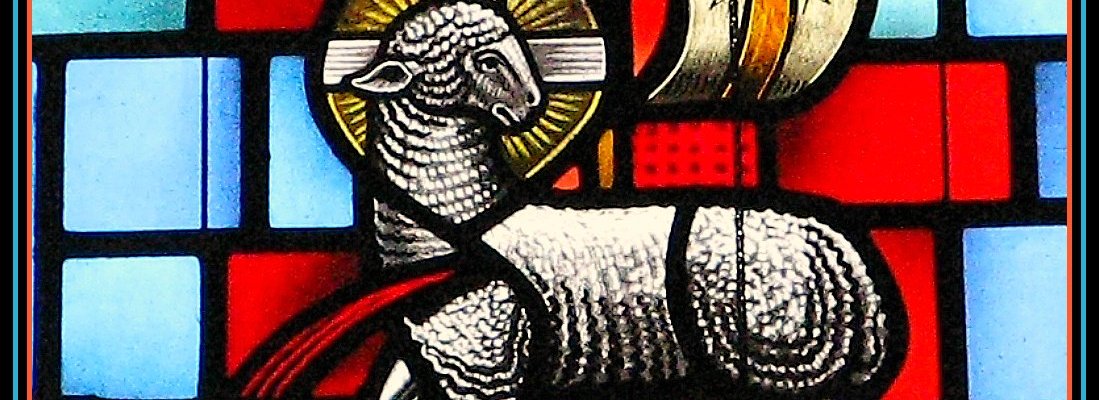
Lastly, as we have already affirmed, the sacrifice of Christ on the cross is accomplished once and for all. Christ uttered the words, “It is finished.” Christ is not re-sacrificed in the Eucharist. However, the exhibition of his sacrifice and it’s application continues. In John’s Apocalypse, He has a vision of the throne room of God, and he sees, “a Lamb as though it had been slain,” (Revelation 5:6) And later in the Apocalypse, Jesus is described as “the Lamb slain from the foundation of the world.” (Revelation 13:8) So, there is a sense in which the sacrifice of Christ is slain from eternity, that just as Christ is the eternal Word, He is also the eternal Sacrifice. It happened in history, concretely, and once, but it is exhibited and applied transtemporally.
Now, this is certainly a mystery, and subject to much speculation as to how this occurs. And it is at this point where there may be substantial difference between the Roman tradition and the Reformed Catholic tradition. The Reformed Catholic will affirm the Eucharist as a thanksgiving, memorial, and praise sacrifice, but would not say the Eucharist is a propitiatory sacrifice. It is a memorial sacrifice of the propitiatory sacrifice and the exhibition and application of that propitiatory sacrifice, but it’s not a propitiatory sacrifice in itself. But Rome sees the sacrifice of Christ on the cross and the Eucharist as being so united that it can be called a propitiatory sacrifice. Now, this may be a distinction without a difference, or perhaps it’s substantially different. I don’t know, but I don’t think it’s enough to break fellowship over due the mysteriousness of the subject itself.
So, to summarize: the Body of Christ as Jesus on the cross is a sacrifice. The Body of Christ as the Church is a sacrifice. And the Body of Christ as the Eucharist is a sacrifice. These sacrifices are not exclusive to each other, they are all integrated, and connected, and form the mosaic of Christian worship, which is acceptable to God by faith through the sacrifice of Christ.
The Great Tradition
This understanding of the Eucharist is something that is attested to by The Great Tradition of our Christian patrimony.
Peter Marty Vermigli, a great Italian Reformer of the 16th century, in his commentary on the book of Judges says, “Insofar as by the same act [i.e., the Eucharist] we celebrate the memory of Christ’s death, give him thanks for gifts received, and consecrate and offer ourselves to God, it is and may be called proper sacrifice by which we give most acceptable oblations to God himself.” (‘Of Sacrifice’ in McLelland and Duffield, Peter Martyr, 313.) I would affirm this wholeheartedly, but it should be noted that Vermigli ultimately decided to reject using the language of sacrifice and priest because there is not explicit mention of the Eucharist as a sacrifice nor of new covenant ministers being priests, which I can understand and fully respect. Though, The Rev. Dr. Eric Park has pointed out that Vermigli was okay with using the term sacrament for the Eucharist, which is a term that also is not explicitly applied to the Eucharist in Scripture. So, there is some inconsistency there. But given the historical circumstance of the Reformation I don’t blame him for this.
Nicholas Ridley, the Anglican Bishop of London, and one of the Oxford Martyrs says, “As though our unbloody Sacrifice of the Church were any other than the Sacrifice of praise and thanksgiving, than a commemoration, a shewing forth, and a sacramental representation of that one only bloody Sacrifice, offered up once for all.” (Ridley’s Works, Parker Society, p. 210)
Another Anglican, Bishop Lancelot Andrewes, who served during the reign of Queen Elizabeth I and King James I says in his Answer to Cardinal Perron, “The Eucharist ever was, and by us is considered, both a sacrament and a Sacrifice.”
In one of the earliest extra-biblical Christian documents, the Didache, we see Christian worship, at the very least, described in sacrificial terms: “But every Lord’s day gather yourselves together, and break bread, and give thanksgiving after having confessed your transgressions, that your sacrifice may be pure. But let no one who is at odds with his fellow come together with you, until they be reconciled, that your sacrifice may not be profaned. For this is that which was spoken by the Lord: “In every place and time offer to me a pure sacrifice; for I am a great King, says the Lord, and my name is wonderful among the nations.” (Didache 14) The quotation here is from Malachi which we had mentioned already.
The very early bishop Ignatius of Antioch, connects an altar to the Eucharist. “Take heed, then, to have but one Eucharist. For there is one flesh of our Lord Jesus Christ, and one cup to [show forth ] the unity of His blood; one altar; as there is one bishop, along with the presbytery and deacons, my fellow-servants…” (Ignatius to the Philadelphians ch. 4)
Justin Martyr, in his dialogue with Trypho says that the fine flour offerings in the old testament were a type of Eucharist. He also quotes the passage from Malachi to say that the sacrifices of the Jews are no longer acceptable to God, but the Gentile sacrifices are. After quoting Malachi, Justin says, “He then speaks of those Gentiles, namely us, who in every place offer sacrifices to Him, the bread of the Eucharist, and also the cup of the Eucharist, affirming both that we glorify His name, and that you profane it.” (Dialogue with Trypho, 41)
St. Irenaeus says, “Again, giving directions to His disciples to offer to God the first-fruits of His own, created things — not as if He stood in need of them, but that they might be themselves neither unfruitful nor ungrateful — He took that created thing, bread, and gave thanks, and said, This is My body. Matthew 26:26, etc. And the cup likewise, which is part of that creation to which we belong, He confessed to be His blood, and taught the new oblation of the new covenant; which the Church receiving from the apostles, offers to God throughout all the world, to Him who gives us as the means of subsistence the first-fruits of His own gifts in the New Testament.” (Against Heresies, 4.17.5) Irenaeus goes on to also supplement this doctrine by quoting the Malachi prophecy.
St. Augustine in the City of God talks about all these various aspects of sacrifice in the Christian Church and includes the sacrifice of the Eucharist. “Accordingly, when the apostle had exhorted us to present our bodies a living sacrifice, holy, acceptable to God, our reasonable service, and not to be conformed to the world, but to be transformed in the renewing of our mind, that we might prove what is that good, and acceptable, and perfect will of God, that is to say, the true sacrifice of ourselves, he says, “For I say, through the grace of God which is given unto me, to every man that is among you, not to think of himself more highly than he ought to think, but to think soberly, according as God hath dealt to every man the measure of faith. For, as we have many members in one body, and all members have not the same office, so we, being many, are one body in Christ, and every one members one of another, having gifts differing according to the grace that is given to us.” This is the sacrifice of Christians: we, being many, are one body in Christ. And this also is the sacrifice which the Church continually celebrates in the sacrament of the altar, known to the faithful, in which she teaches that she herself is offered in the offering she makes to God.” (City of God 10.6) Here Augustine focuses on the offering of the Church in the Eucharist, but he also discusses the other sacrificial aspects of thanksgiving and memorial as well.
Conclusion
There is so much more that could be said on this topic. If you’re interested in more, I would recommend The One Offering by the Anglican priest M. F. Sadler. Brant Pitre’s Jesus and the Jewish Roots of the Eucharist is also good. Steven Wedgeworth has a good article at The Calvinist International on Augustine and Eucharistic Sacrifice. And there’s also a good article on The North American Anglican called Calvinism and Eucharistic Sacrifice by Eric Parker.
The sacrifice of the Eucharist is a mystery, and it shouldn’t bother us if we don’t have all the mechanics worked out, or that we even agree on every aspect of it. But there is enough in Scripture and Tradition for me not to abandon the traditional language of the rite. And I don’t believe there is enough difference in varying understandings to allow division among Christians. And even for those who deny that a sacrifice is made, as long as they are doing the Eucharist, as Christ said, and giving thanks for it, they are, in my view, objectively offering a sacrifice to God. The objective nature of the sacrifice isn’t dependent on our understanding of it. Simple faith in Christ and obedience to His commands is enough common ground for unity on this issue.
 Feller of Trees